
June, 2026
now browsing by month
Against the Odds – David Lerner
it’s impossible
that we keep breathing
with all the years
pressing on our chest
it’s impossible
that we keep walking
given the condition
of the heart’s terrain
it’s impossible
that laughter continues to spill
from the cracks in our sorrow
that anger continues to be
a kind of faith
that the small graces
coffee, clean socks, the stillness of night
still sustain us
sometimes
it’s impossible
how we break on our dreams
and then dream them again
how amidst the thousand small terrors
of daily life
it is possible to be kind
how as the ax falls
and nooses swing
we go on checking the TV Guide for decent movies
accepting some phone calls, dodging others
doing battle with the rent and the weather and
the holes in our shoes and
the distance between us
there is something inside me that says
yes
there is no way out
you have to play this terrible guitar
until the strings break
or your fingers
but the music I know
in the moments between
the panic I hold more intimately
than any lover
it’s impossible
how much sorrow
a smile can hold
Poetry
- A Dog Has Died – Pablo Neruda
- A Moment of Silence – Emmanuel Ortiz
- A Quiet Life – Baron Wormser
- A Reminder – found and slightly edited from the webpage of a Methodist Church
- A Wreath to the Fish – Nancy Willard
- Acceptance Speech After Setting the World Record in Goosebumps – Andrea Gibson
- Against the Odds – David Lerner
- Aimless Love – Billy Collins
- All’ve It – Matt Moberg
- Alone – Jack Gilbert
- Another Planet – Dunya Mikhail
- Be Kind, Rewind – Neil Silberblatt
- Big Conversation – Rosemerry Wahtola Trommer
- Black Momma Math – Kimberly Jae
- Boplicity or Jimmy Throws a Houseparty for Huey Newton – Daniel B. Summerhill
- Capitol Air – Allen Ginsburg
- Combat Primer – Charles Bukowski
- Crow – Doug Anderson
- Crow Blacker Than Ever – Ted Hughes
- Dear white people – Makhadzi Mudzweda
- Detour – Ruth Feldman
- Dismiss Whatever Insults Your Own Soul – Walt Whitman
- Do You Know What Today Is? – Danez Smith
- Don’t fall in love with a woman who reads – Martha Rivera-Garrido
- Failing and Flying – Jack Gilbert
- Feel Mo – Michael Korson
- Footprints In Your Heart – Eleanor Roosvelt
- For Calling the Spirit Back from Wandering the Earth in Its Human Feet – Joy Harjo
- Forgetfulness – Billy Collins
- Gate A-4 – Naomi Shihab Nye
- Georgics: Book I excerpt – Virgil
- God – Brian Doyle
- God Says Yes To Me – Kaylin Haught
- Growing Old – Emma Rosenberg
- Half-light – Dāshaun Washington
- Homesick: A Plea for Our Planet – Andrea Gibson
- How Poetry Comes to Me – Ruah Bull
- How She Heard It – Todd Davis
- How to Slay a Dragon – Rebecca Dupas
- I Talked to a Lady – Tanya Howden
- I Wish I Knew How It Would Feel to Be Free -Billy Taylor and Dick Dallas
- If You Knew – Ellen Bass
- Instructions before visiting Earth – James McCrae
- It Happens All the Time – Hafez
- KINDNESS – Naomi Shihab Nye
- Love at First Sight – Wisława Szymborska
- Love is Not All – Edna St. Vincent Millay
- Manifesto: The Mad Farmer Liberation Front – Wendell Berry
- Men – Maya Angelou
- Millennium Blessing – Stephen Levine
- my brain and heart divorced ~ john roedel
- My Country – Tony Hoagland
- Ode to Those Who Block Tunnels and Bridges – Sam Sax
- Old Man Eating Alone – Billy Collins
- Our Real Work – Wendell Berry
- Pilgrim at Tinker Creek excerpt – Annie Dillard
- Poetry – Pablo Neruda
- Prayer – Marie Howe
- Primer For Blacks – Gwendolyn Brooks
- Psalm for the Slightly Tilted – Ilya Kaminsky
- Record Player – Adrian Matejka
- Relax – Ellen Bass
- Shoveling Snow With Buddha – Billy Collins
- Sing and Pilot – Svitlana Povaliaieva
- Sleeping in the Forest – Mary Oliver
- Small Stack of Books – Blake Nelson
- Soliloquy of the Solipsist – Sylvia Plath
- Spider – Andrea Gibson
- spring – Safia Elhillo
- Squirrel – Lynn Ungar
- Tangled Up In Blue – Bob Dylan
- Telephone Booth (number 905 1/2) – Pedro Pietri
- The Best Poem Ever – Brian Doyle
- The Caveman’s Lament – Brian Bilston
- The Four Noble Truths – Jake Onami Agnew
- The Future – Rosemerry Wahtola Trommer
- The History of One Tough Motherfucker – Charles Bukowski
- The Holy Longing – J.W. von Goethe
- The Layers – Stanley Kunitz
- The Long Boat – Stanley Kunitz
- The Lost Hotels of Paris – Jack Gilbert
- The Moon is Full Tonight – Billy Collins
- The Shyness – Sharon Olds
- The Silence of the Stars – David Wagoner
- The U.N. Headquarters in the High Commissioner’s House in Jerusalem – Yehuda Amichai
- The War Works Hard – Dunya Mikhail
- The World is Both Burning and Blooming – Karen Salmansohn
- To Diego with Love – Frida Kalko
- Tryst with Death – Gina Puorro
- Two poems – Yehuda Amichai
- Two-bloods – Rolando Kattan
- Wage Peace – Mary Oliver
- War Primer – Bertholt Brecht
- We are the Trees – J Raymond
- We will meet, don’t be in such a rush – Hala alShrouf
- Wendell Berry – Enriching the Earth
- Wendell Berry – The Loved Ones
- Wendell Berry – Two Poems
- What I Learned From Listening to a Stutterer – Ellen Zorin
- What lips my lips have kissed, and where, and why – Edna St. Vincent Millay

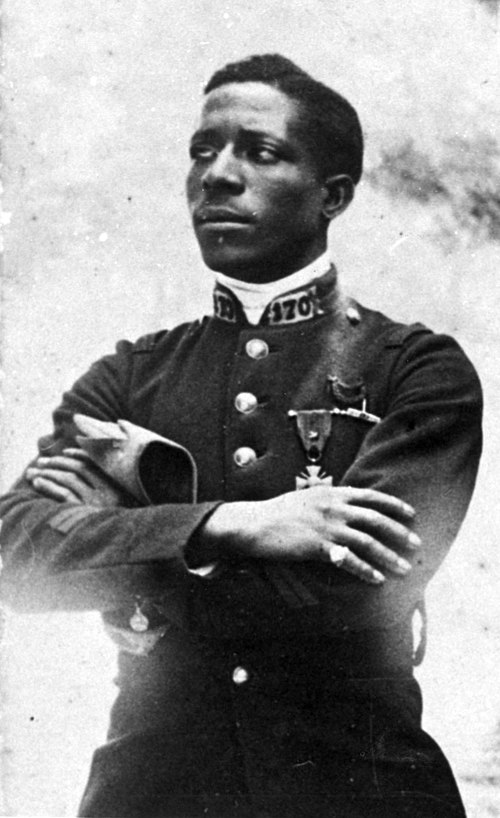
Eugene Bullard – a hidden figure
When the President of France visited the United States in April 1960, he asked the FBI to help him find a man.
The man he was looking for was an American citizen. He was sixty-four years old. He had been awarded fifteen French military decorations and — six months earlier, in a ceremony in Paris — had been made a Knight of the Légion d’honneur, the highest civilian honor France can give. The medal had been pinned to his chest by the President himself, who had publicly called him un véritable héros français. A true French hero.
The FBI located the man within a few days.
He was operating an elevator at Rockefeller Center in New York City.
The elevator operator’s name was Eugene Bullard. He had been born in Columbus, Georgia, in 1895, the son of a man whose own father had been a slave.
He had run away from Columbus at the age of eleven, after watching a white mob nearly lynch his father.
He spent the next several years drifting through the American South. At sixteen, he stowed away on a German freighter at Norfolk, Virginia. He landed in Aberdeen, Scotland. From there he made his way to London, where he learned to box. By 1913, at eighteen, he was prizefighting in Paris.
When Germany invaded France in August 1914, Bullard was nineteen years old. He had no legal obligation to fight. He had no French citizenship.
He went to the recruiting office on October 19, 1914, and signed up for the French Foreign Legion.
He spent the next eighteen months as an infantryman in some of the worst fighting of the war — at the Somme, at Champagne, at Verdun. He was wounded three times. The third wound, on March 5, 1916, tore open his thigh and left him with permanent damage to his leg.
He was twenty years old. The doctors told him he would not return to the infantry.
He decided he wanted to fly.
In a Paris café in the spring of 1916, while he was recovering, Bullard mentioned to three white American friends that he was thinking of joining the French air service. A Mississippian named Jeff Dickson laughed.
Gene, Dickson said, you know damn well there aren’t any Negroes in aviation.
Bullard answered: Sure do. That’s why I want to get into it. There has to be a first to everything, and I’m going to be the first.
Dickson bet him two thousand dollars he would not make it.
Bullard took the bet. He earned his pilot’s license on May 5, 1917. He won the bet.
He reported to the front in August 1917 and flew approximately twenty combat missions over the next three months in a SPAD VII. The fuselage was painted with a bleeding heart pierced by a knife and the French phrase Tout le Sang qui Coule est Rouge — All Blood that Flows is Red.
He carried, on every combat flight, a small capuchin monkey named Jimmy in the front of his flight jacket.
The French press began calling him L’Hirondelle Noire — the Black Swallow.
When the United States entered the war in 1917, Bullard immediately applied to transfer to the U.S. Army Air Service.
His application was rejected.
The U.S. Army Air Service had a policy, in 1917, of not accepting Black pilots. The other American pilots flying for France in his unit, all of them white, were transferred to the U.S. Air Service.
He was the only one who was not.
For the next twenty years, he was one of the most familiar faces in the Montmartre nightlife of Paris between the wars. He owned a nightclub called L’Escadrille. He spoke fluent French, English, and German. Hemingway drank there. Fitzgerald drank there. Langston Hughes drank there. Josephine Baker performed there. Louis Armstrong was a personal friend.
When Germany invaded Poland in 1939, Bullard was forty-four. His fluent German and his ownership of a nightclub frequented by German officers made him useful to the French Resistance. He became an intelligence agent — eavesdropping in his own bar on conversations between German officers who did not know he understood every word.
When France fell in June 1940, friends in the Resistance smuggled him across the Spanish border before the Gestapo could arrest him.
He came back to the United States for the first time in twenty-eight years.
He arrived in New York with thirty dollars in his pocket and a permanent limp.
He did not return to a hero’s welcome. He returned to a country that had no idea who he was.
He worked at a perfume counter. He worked as a security guard. He worked at the Staten Island shipyards. By the late 1940s, he had taken the job that he would hold for most of the rest of his life.
He operated the elevator at Rockefeller Center.
He was wearing the elevator uniform on the day a producer from NBC came down from the studios upstairs to ask if he was the man Charles de Gaulle had been looking for.
A few weeks later, NBC sent a film crew to interview him in the lobby. The studios where NBC produced The Today Show were on the floors above. He had operated the elevator that took the network executives up to those studios every morning for nearly ten years. He had not been recognized as he did it.
He went back to operating the elevator the following Monday.
He died of stomach cancer on October 12, 1961, three days after his sixty-sixth birthday.
He was buried in the French War Veterans’ section of Flushing Cemetery, in Queens, in the uniform of the French Foreign Legion. The casket was draped with the French flag.
In 1994 — thirty-three years after his death — the United States Air Force formally commissioned Eugene Jacques Bullard as a Second Lieutenant, posthumously.
It was the first commission the U.S. military had ever offered him.
He had been the first Black combat pilot in American history.
The French had been calling him a hero since 1917.
The Americans got around to it in 1994.
Do You Know What Today Is? – Danez Smith
unfortunately, or blessed, it could have been
hours, or years, but it was hours
we disappeared into, touch i shouldn’t
savor, not this day, not while missing you,
not this deep in love, but a year ago,
or was it days, we said i do
which under it laid dozens more commitments,
one being our commitment to pleasure,
to touch, to the touch of others, so i do
but also i will continue to do it, that it,
with people that are not you—love,
believe it, or not, lives in that promise
too, i love the sounds others pull from you,
i love your ecstasy even if i’m not around
to engineer it, and here i am, on the other
side of the promise, on the other side
of the world, underneath this person
who i have promised nothing
but my attention and effort until it’s done,
and it was, done under the moon
until the rain started and, then, done
under the rain, i am ashamed to say it,
but i must say it: i would have asked them
to stay, to do it again, to touch me forever
had i not, and thank God i did,
placed my forever in you, but amor,
amor, you should have seen it, us:
beneath the rain, a storm,
under the promise,
my loaned breath.
God – Brian Doyle
By purest chance I was out in our street
when the kindergarten
Bus mumbled past going slow and I
looked up just as all seven
Kids on my side of the bus looked at
me and I grinned and they
Lit up and all this crap about God being
dead and where is God
And who owns God and who hears
God better than whom is the
Most egregiously stupid crap
imaginable because if you want to
See God and have God see you and
have this mutual perception
Be completely untrammeled by blather
and greed and comment,
Go stand in the street as the
kindergarten bus murmurs past. I’m
Not kidding and this is not a metaphor.
I am completely serious.
Everyone babbles about God but I saw
God this morning just as
The bus slowed down for the stop on
Maple Street. God was six
Girls and one boy with a bright green
and purple stegosaurus hat.
Of course God would wear a brilliantly
colored tall dinosaur hat!
If you were the Imagination that
dreamed up everything that ever
Was in this blistering perfect terrible
world, wouldn’t you wear a
Hat celebrating some of the wildest
most amazing developments?

Poetry
- A Dog Has Died – Pablo Neruda
- A Moment of Silence – Emmanuel Ortiz
- A Quiet Life – Baron Wormser
- A Reminder – found and slightly edited from the webpage of a Methodist Church
- A Wreath to the Fish – Nancy Willard
- Acceptance Speech After Setting the World Record in Goosebumps – Andrea Gibson
- Against the Odds – David Lerner
- Aimless Love – Billy Collins
- All’ve It – Matt Moberg
- Alone – Jack Gilbert
- Another Planet – Dunya Mikhail
- Be Kind, Rewind – Neil Silberblatt
- Big Conversation – Rosemerry Wahtola Trommer
- Black Momma Math – Kimberly Jae
- Boplicity or Jimmy Throws a Houseparty for Huey Newton – Daniel B. Summerhill
- Capitol Air – Allen Ginsburg
- Combat Primer – Charles Bukowski
- Crow – Doug Anderson
- Crow Blacker Than Ever – Ted Hughes
- Dear white people – Makhadzi Mudzweda
- Detour – Ruth Feldman
- Dismiss Whatever Insults Your Own Soul – Walt Whitman
- Do You Know What Today Is? – Danez Smith
- Don’t fall in love with a woman who reads – Martha Rivera-Garrido
- Failing and Flying – Jack Gilbert
- Feel Mo – Michael Korson
- Footprints In Your Heart – Eleanor Roosvelt
- For Calling the Spirit Back from Wandering the Earth in Its Human Feet – Joy Harjo
- Forgetfulness – Billy Collins
- Gate A-4 – Naomi Shihab Nye
- Georgics: Book I excerpt – Virgil
- God – Brian Doyle
- God Says Yes To Me – Kaylin Haught
- Growing Old – Emma Rosenberg
- Half-light – Dāshaun Washington
- Homesick: A Plea for Our Planet – Andrea Gibson
- How Poetry Comes to Me – Ruah Bull
- How She Heard It – Todd Davis
- How to Slay a Dragon – Rebecca Dupas
- I Talked to a Lady – Tanya Howden
- I Wish I Knew How It Would Feel to Be Free -Billy Taylor and Dick Dallas
- If You Knew – Ellen Bass
- Instructions before visiting Earth – James McCrae
- It Happens All the Time – Hafez
- KINDNESS – Naomi Shihab Nye
- Love at First Sight – Wisława Szymborska
- Love is Not All – Edna St. Vincent Millay
- Manifesto: The Mad Farmer Liberation Front – Wendell Berry
- Men – Maya Angelou
- Millennium Blessing – Stephen Levine
- my brain and heart divorced ~ john roedel
- My Country – Tony Hoagland
- Ode to Those Who Block Tunnels and Bridges – Sam Sax
- Old Man Eating Alone – Billy Collins
- Our Real Work – Wendell Berry
- Pilgrim at Tinker Creek excerpt – Annie Dillard
- Poetry – Pablo Neruda
- Prayer – Marie Howe
- Primer For Blacks – Gwendolyn Brooks
- Psalm for the Slightly Tilted – Ilya Kaminsky
- Record Player – Adrian Matejka
- Relax – Ellen Bass
- Shoveling Snow With Buddha – Billy Collins
- Sing and Pilot – Svitlana Povaliaieva
- Sleeping in the Forest – Mary Oliver
- Small Stack of Books – Blake Nelson
- Soliloquy of the Solipsist – Sylvia Plath
- Spider – Andrea Gibson
- spring – Safia Elhillo
- Squirrel – Lynn Ungar
- Tangled Up In Blue – Bob Dylan
- Telephone Booth (number 905 1/2) – Pedro Pietri
- The Best Poem Ever – Brian Doyle
- The Caveman’s Lament – Brian Bilston
- The Four Noble Truths – Jake Onami Agnew
- The Future – Rosemerry Wahtola Trommer
- The History of One Tough Motherfucker – Charles Bukowski
- The Holy Longing – J.W. von Goethe
- The Layers – Stanley Kunitz
- The Long Boat – Stanley Kunitz
- The Lost Hotels of Paris – Jack Gilbert
- The Moon is Full Tonight – Billy Collins
- The Shyness – Sharon Olds
- The Silence of the Stars – David Wagoner
- The U.N. Headquarters in the High Commissioner’s House in Jerusalem – Yehuda Amichai
- The War Works Hard – Dunya Mikhail
- The World is Both Burning and Blooming – Karen Salmansohn
- To Diego with Love – Frida Kalko
- Tryst with Death – Gina Puorro
- Two poems – Yehuda Amichai
- Two-bloods – Rolando Kattan
- Wage Peace – Mary Oliver
- War Primer – Bertholt Brecht
- We are the Trees – J Raymond
- We will meet, don’t be in such a rush – Hala alShrouf
- Wendell Berry – Enriching the Earth
- Wendell Berry – The Loved Ones
- Wendell Berry – Two Poems
- What I Learned From Listening to a Stutterer – Ellen Zorin
- What lips my lips have kissed, and where, and why – Edna St. Vincent Millay
Psalm for the Slightly Tilted – Ilya Kaminsky
This is not
a good year.
But it has
witnesses.
When you see them protest the powerful,
since who else does,
they stand
like flagpoles outside the courthouse
after a northeaster.
They came with
the wrong shoes
for revolution.
Still,
they showed up.
Comfort, Lord,
their bodies—
each a question mark
doing time
as a coat rack,
hung with borrowed jackets.
They are your legion
of bent spoons.
They are the only ones
who showed up—
with their orthopedic flair.
I saw my people lean—
not toward hope but toward each other.
They chant off-rhythm
and mean it.
These are my kind of people:
no tears—just
steam from a kettle
that never quite boils.
In times like these, don’t forget us:
the lopsided
leaning on one another.
Poetry
- A Dog Has Died – Pablo Neruda
- A Moment of Silence – Emmanuel Ortiz
- A Quiet Life – Baron Wormser
- A Reminder – found and slightly edited from the webpage of a Methodist Church
- A Wreath to the Fish – Nancy Willard
- Acceptance Speech After Setting the World Record in Goosebumps – Andrea Gibson
- Against the Odds – David Lerner
- Aimless Love – Billy Collins
- All’ve It – Matt Moberg
- Alone – Jack Gilbert
- Another Planet – Dunya Mikhail
- Be Kind, Rewind – Neil Silberblatt
- Big Conversation – Rosemerry Wahtola Trommer
- Black Momma Math – Kimberly Jae
- Boplicity or Jimmy Throws a Houseparty for Huey Newton – Daniel B. Summerhill
- Capitol Air – Allen Ginsburg
- Combat Primer – Charles Bukowski
- Crow – Doug Anderson
- Crow Blacker Than Ever – Ted Hughes
- Dear white people – Makhadzi Mudzweda
- Detour – Ruth Feldman
- Dismiss Whatever Insults Your Own Soul – Walt Whitman
- Do You Know What Today Is? – Danez Smith
- Don’t fall in love with a woman who reads – Martha Rivera-Garrido
- Failing and Flying – Jack Gilbert
- Feel Mo – Michael Korson
- Footprints In Your Heart – Eleanor Roosvelt
- For Calling the Spirit Back from Wandering the Earth in Its Human Feet – Joy Harjo
- Forgetfulness – Billy Collins
- Gate A-4 – Naomi Shihab Nye
- Georgics: Book I excerpt – Virgil
- God – Brian Doyle
- God Says Yes To Me – Kaylin Haught
- Growing Old – Emma Rosenberg
- Half-light – Dāshaun Washington
- Homesick: A Plea for Our Planet – Andrea Gibson
- How Poetry Comes to Me – Ruah Bull
- How She Heard It – Todd Davis
- How to Slay a Dragon – Rebecca Dupas
- I Talked to a Lady – Tanya Howden
- I Wish I Knew How It Would Feel to Be Free -Billy Taylor and Dick Dallas
- If You Knew – Ellen Bass
- Instructions before visiting Earth – James McCrae
- It Happens All the Time – Hafez
- KINDNESS – Naomi Shihab Nye
- Love at First Sight – Wisława Szymborska
- Love is Not All – Edna St. Vincent Millay
- Manifesto: The Mad Farmer Liberation Front – Wendell Berry
- Men – Maya Angelou
- Millennium Blessing – Stephen Levine
- my brain and heart divorced ~ john roedel
- My Country – Tony Hoagland
- Ode to Those Who Block Tunnels and Bridges – Sam Sax
- Old Man Eating Alone – Billy Collins
- Our Real Work – Wendell Berry
- Pilgrim at Tinker Creek excerpt – Annie Dillard
- Poetry – Pablo Neruda
- Prayer – Marie Howe
- Primer For Blacks – Gwendolyn Brooks
- Psalm for the Slightly Tilted – Ilya Kaminsky
- Record Player – Adrian Matejka
- Relax – Ellen Bass
- Shoveling Snow With Buddha – Billy Collins
- Sing and Pilot – Svitlana Povaliaieva
- Sleeping in the Forest – Mary Oliver
- Small Stack of Books – Blake Nelson
- Soliloquy of the Solipsist – Sylvia Plath
- Spider – Andrea Gibson
- spring – Safia Elhillo
- Squirrel – Lynn Ungar
- Tangled Up In Blue – Bob Dylan
- Telephone Booth (number 905 1/2) – Pedro Pietri
- The Best Poem Ever – Brian Doyle
- The Caveman’s Lament – Brian Bilston
- The Four Noble Truths – Jake Onami Agnew
- The Future – Rosemerry Wahtola Trommer
- The History of One Tough Motherfucker – Charles Bukowski
- The Holy Longing – J.W. von Goethe
- The Layers – Stanley Kunitz
- The Long Boat – Stanley Kunitz
- The Lost Hotels of Paris – Jack Gilbert
- The Moon is Full Tonight – Billy Collins
- The Shyness – Sharon Olds
- The Silence of the Stars – David Wagoner
- The U.N. Headquarters in the High Commissioner’s House in Jerusalem – Yehuda Amichai
- The War Works Hard – Dunya Mikhail
- The World is Both Burning and Blooming – Karen Salmansohn
- To Diego with Love – Frida Kalko
- Tryst with Death – Gina Puorro
- Two poems – Yehuda Amichai
- Two-bloods – Rolando Kattan
- Wage Peace – Mary Oliver
- War Primer – Bertholt Brecht
- We are the Trees – J Raymond
- We will meet, don’t be in such a rush – Hala alShrouf
- Wendell Berry – Enriching the Earth
- Wendell Berry – The Loved Ones
- Wendell Berry – Two Poems
- What I Learned From Listening to a Stutterer – Ellen Zorin
- What lips my lips have kissed, and where, and why – Edna St. Vincent Millay
How Poetry Comes to Me – Ruah Bull
Poems come sometimes
like a dog in my bed
pressing its cold brown nose
against my cheek– insisting, insisting-
wake up!
Sometimes like a cat
yowling under the couch
until down on hands and knees
I scramble in the dust and dirt
and pull.
Then there are the ones
still as a pregnant hare
waiting for the
winged shadow
to pass.

Poetry
- A Dog Has Died – Pablo Neruda
- A Moment of Silence – Emmanuel Ortiz
- A Quiet Life – Baron Wormser
- A Reminder – found and slightly edited from the webpage of a Methodist Church
- A Wreath to the Fish – Nancy Willard
- Acceptance Speech After Setting the World Record in Goosebumps – Andrea Gibson
- Against the Odds – David Lerner
- Aimless Love – Billy Collins
- All’ve It – Matt Moberg
- Alone – Jack Gilbert
- Another Planet – Dunya Mikhail
- Be Kind, Rewind – Neil Silberblatt
- Big Conversation – Rosemerry Wahtola Trommer
- Black Momma Math – Kimberly Jae
- Boplicity or Jimmy Throws a Houseparty for Huey Newton – Daniel B. Summerhill
- Capitol Air – Allen Ginsburg
- Combat Primer – Charles Bukowski
- Crow – Doug Anderson
- Crow Blacker Than Ever – Ted Hughes
- Dear white people – Makhadzi Mudzweda
- Detour – Ruth Feldman
- Dismiss Whatever Insults Your Own Soul – Walt Whitman
- Do You Know What Today Is? – Danez Smith
- Don’t fall in love with a woman who reads – Martha Rivera-Garrido
- Failing and Flying – Jack Gilbert
- Feel Mo – Michael Korson
- Footprints In Your Heart – Eleanor Roosvelt
- For Calling the Spirit Back from Wandering the Earth in Its Human Feet – Joy Harjo
- Forgetfulness – Billy Collins
- Gate A-4 – Naomi Shihab Nye
- Georgics: Book I excerpt – Virgil
- God – Brian Doyle
- God Says Yes To Me – Kaylin Haught
- Growing Old – Emma Rosenberg
- Half-light – Dāshaun Washington
- Homesick: A Plea for Our Planet – Andrea Gibson
- How Poetry Comes to Me – Ruah Bull
- How She Heard It – Todd Davis
- How to Slay a Dragon – Rebecca Dupas
- I Talked to a Lady – Tanya Howden
- I Wish I Knew How It Would Feel to Be Free -Billy Taylor and Dick Dallas
- If You Knew – Ellen Bass
- Instructions before visiting Earth – James McCrae
- It Happens All the Time – Hafez
- KINDNESS – Naomi Shihab Nye
- Love at First Sight – Wisława Szymborska
- Love is Not All – Edna St. Vincent Millay
- Manifesto: The Mad Farmer Liberation Front – Wendell Berry
- Men – Maya Angelou
- Millennium Blessing – Stephen Levine
- my brain and heart divorced ~ john roedel
- My Country – Tony Hoagland
- Ode to Those Who Block Tunnels and Bridges – Sam Sax
- Old Man Eating Alone – Billy Collins
- Our Real Work – Wendell Berry
- Pilgrim at Tinker Creek excerpt – Annie Dillard
- Poetry – Pablo Neruda
- Prayer – Marie Howe
- Primer For Blacks – Gwendolyn Brooks
- Psalm for the Slightly Tilted – Ilya Kaminsky
- Record Player – Adrian Matejka
- Relax – Ellen Bass
- Shoveling Snow With Buddha – Billy Collins
- Sing and Pilot – Svitlana Povaliaieva
- Sleeping in the Forest – Mary Oliver
- Small Stack of Books – Blake Nelson
- Soliloquy of the Solipsist – Sylvia Plath
- Spider – Andrea Gibson
- spring – Safia Elhillo
- Squirrel – Lynn Ungar
- Tangled Up In Blue – Bob Dylan
- Telephone Booth (number 905 1/2) – Pedro Pietri
- The Best Poem Ever – Brian Doyle
- The Caveman’s Lament – Brian Bilston
- The Four Noble Truths – Jake Onami Agnew
- The Future – Rosemerry Wahtola Trommer
- The History of One Tough Motherfucker – Charles Bukowski
- The Holy Longing – J.W. von Goethe
- The Layers – Stanley Kunitz
- The Long Boat – Stanley Kunitz
- The Lost Hotels of Paris – Jack Gilbert
- The Moon is Full Tonight – Billy Collins
- The Shyness – Sharon Olds
- The Silence of the Stars – David Wagoner
- The U.N. Headquarters in the High Commissioner’s House in Jerusalem – Yehuda Amichai
- The War Works Hard – Dunya Mikhail
- The World is Both Burning and Blooming – Karen Salmansohn
- To Diego with Love – Frida Kalko
- Tryst with Death – Gina Puorro
- Two poems – Yehuda Amichai
- Two-bloods – Rolando Kattan
- Wage Peace – Mary Oliver
- War Primer – Bertholt Brecht
- We are the Trees – J Raymond
- We will meet, don’t be in such a rush – Hala alShrouf
- Wendell Berry – Enriching the Earth
- Wendell Berry – The Loved Ones
- Wendell Berry – Two Poems
- What I Learned From Listening to a Stutterer – Ellen Zorin
- What lips my lips have kissed, and where, and why – Edna St. Vincent Millay