
Templates
now browsing by category
This is for adding content and maintaining the standardized layout.
Dear white people – Makhadzi Mudzweda
Dear white people:
I don’t even know where to start
In between my busy schedule comprised entirely of surviving white America
There is simply no time to write letters
Besides any letter I write will most likely bring tears to your very eyes and I for one have had my fill of white tears
There are days I think you are not worth my ink, that your whiteness is draining me of too much energy
Can’t give you a taste of tea for fear you’ll colonize the whole kitchen
But today I am too angry to remain silent
Dear white people:
Stop making everything about you and how uncomfortable you are
I honestly don’t care about your comfort level
You have made my very existence and exercise in discomfort
It is time for you to make room at the table
-Better yet go sit in the living room
I am not here to cuddle your feelings-
not here for your amusement
NO you cannot touch my hair
-its not a petting zoo
And stop coming into my office asking for the managers if you are not already looking at one
Dear white people:
Dear white people-
Stop telling me about this “COLOUR BLIND SOCIETY”
-you allegedly live in
-telling me you don’t see race is the racist drivel I hope you choke on
-Telling me you respect me, but don’t see my colour
Is like saying you have to pretend that “I AM NOT BLACK”
In order to respect me
But let me assure you
I AM BLACK ……though there are plenty of things I AM NOT
Like your sassy black friend
Stop saying “hey girl!”
When you see me
You aren’t that slick
I hear the way you talk to Becky and Steve everyday
You sound like vocation on Martha’s Vineyard … where you spent summers waiting in the bitter blue of the Atlantic
How I wish my toes could touch the ocean without stepping on the bones of ancestors
Dear white teachers
Why don’t I know whom my ancestors are
Why is only one part of my history important enough to teach
And for the love of the Creator
Stop swivelling your heads every time slavery is mentioned
… Newsflash, I was not there
And just because I am the only black person in this class
Does not mean you can ask me to speak on behalf of my race
I believe you really care about the opinion of black students when stop shutting down conversations because I call a white student racist
Dear white people:
Why do you hate being called racist more than you hate racism
Why do you listen to Tim Wise over actual black people about the actual black experience
_Dear white people:
Stop using black on black crimes as a reason we should not be outrage by the murder of black people by apartheid system
If a black person kills a black person
they will go to jail
AND THAT IS WHAT WE CALL JUSTICE
When the apartheid kills a black person,,, they will get paid leave
AND THAT IS WHAT WE CALL JUSTICE
Apparently JUSTICE is when a black body dies
Dear white people:
Everytime we write white
We have written it in lowercase letters
because we are tired of you capitalising on our pain
. We are angry
. And raw
. And tired
. And angry
. And raw
. And tired
. And tired
. And tired
But we will not rest because we know the future belongs to those who prepare for it
…..And you have been getting us ready for centuries
Poetry

The U.N. Headquarters in the High Commissioner’s House in Jerusalem – Yehuda Amichai
The mediators, the peacemakers,
the compromise-shapers, the comforters
live in the white house
and get their nourishment from far away,
through winding pipes,
through dark veins,
like a fetus.
Their secretaries are lip sticked and laughing.
Their sturdy chauffeurs wait below,
like horses in a stable,
and the trees that shade them
have their roots in no-man’s land
and the illusions are children
who went out to find cyclamen
and did not come back.
My thoughts pass overhead,
restless, like reconnaissance planes,
and take photos
and develop them in dark sad rooms.
And I know they have heavy chandeliers
and the boy-I-was sits on them
and swings out and back,
out and back,
out till there’s no coming back.
Later on night will arrive
to draw rusty and bent conclusions
from our old lives,
and over all the houses
a melody will gather the scattered word
like a hand gathering crumbs
upon a table after the meal,
when the talk continues
and the children are asleep.
And hopes come to me like bold seafarers,
like the discoverers of continents coming to an island,
and stay for a day or two and rest…
And then again set sail.
.
Poetry
Georgics: Book I excerpt – Virgil
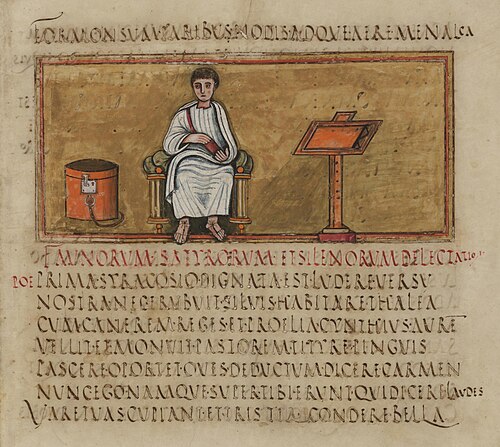
Rain never takes men unawares:
either the cranes, airborne, fly before it, as it reaches
the valley’s depths, or a heifer looks up at the sky
and sniffs the air with nostrils spread,
or the swallows twitter circling the pools,
and the frogs in the mud croak their ancient lament.
And often the ant, beating out a narrow track,
brings eggs from an innermost nest, and a huge rainbow
drinks, and a great troop of rooks leaving the fields
beat their wings together densely, in ranks.
Then the cruel raven’s deep cry calls up the rain,
and, alone with himself, he walks the dry sands.
Even girls, spinning, at their nocturnal task, have not failed
to note the coming storm, seeing the oil sputter
in the fiery lamp, and a clot of soot gather on the wick.
No less, after rain, do we predict sunlight and clear skies,
and recognize fair weather by certain signs:
since the stars’ sharp edges are not obscured
and the Moon rises, not dimmed by her brother’s rays,
and thin fleecy clouds no longer drift across the sky:
But the mists seek out the valleys more, and settle
on the plains, and the owl, watching the sunset
from some high hill, gives out its twilight calls in vain.
Now the rooks repeat their clear calls, three or four times,
with narrowed throats, and often caw to themselves
in their high nests among the leaves, delighting
in some unusual pleasantry: they’re glad, the rain over,
to see their sweet nests and their little chicks again:
not that I think they have divine wisdom
or greater knowledge of the workings of Fate:
but when the weather changes, and the rain from fickle skies,
and Jupiter, among the wet South winds, makes what was now
rarefied, dense, and makes dense what was rarefied,
ideas in their minds alter, and their hearts feel differently,
differently to when the wind was chasing the clouds.
So that chorus of birds in the fields, the delight
of the cattle, the triumphant cries of the rooks.
Poetry
Crow – Doug Anderson
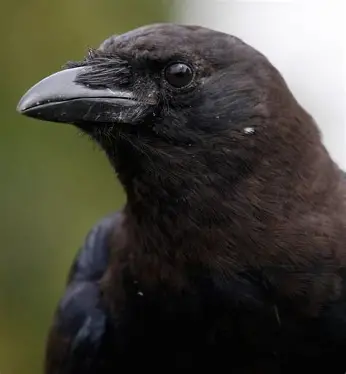
Crows
Hunch in the trees
to gossip
about God and his inexorable
experimenting,
about deer guts and fish so stupid
you could sell them air
and how out in the deserts
there’s a dog called coyote
with their mind
but no wings.
Crow with Iroquois hair.
Crow with a wisecrack for everybody,
Crow with his beak
thrust through a bun,
the paper still clinging.
Then one says something
and they all leave,
complaining
the trees are not what they used to be.
Crow with oilslick eyes.
Crow with a knife
sheathed in a shark’s fin.
Crow
in a midnight blue suit
standing in front of a judge:
Your Honor, I didn’t
kill him, just ate him
and I wasn’t impressed.
Poetry
It Happens All the Time – Hafez
It happens all the time in heaven,
And some day
It will begin to happen
Again on earth –
That men and women who are married,
And men and men who are
Lovers,
And women and women
Who give each other
Light,
Often will get down on their knees
And while so tenderly
Holding their lover’s hand,
With tear-filled eyes,
Will sincerely speak, saying,
“My dear,
How can I be more loving to you;
How can I be more kind?”

Poetry
I Wish I Knew How It Would Feel to Be Free -Billy Taylor and Dick Dallas
Well, I wish I could be like a bird in the sky
How sweet it would be if I found I could fly
Oh, I’d soar to the sun and look down at the sea
And then I’d sing ’cause I’d know, yeah
Then I’d sing ’cause I’d know, yeah
Then I’d sing ’cause I’d know
I’d know how it feels
I’d know how it feels to be free, yeah
Oh, I’d know how it feels to be free.
Poetry
Against the Odds – David Lerner
it’s impossible
that we keep breathing
with all the years
pressing on our chest
it’s impossible
that we keep walking
given the condition
of the heart’s terrain
it’s impossible
that laughter continues to spill
from the cracks in our sorrow
that anger continues to be
a kind of faith
that the small graces
coffee, clean socks, the stillness of night
still sustain us
sometimes
it’s impossible
how we break on our dreams
and then dream them again
how amidst the thousand small terrors
of daily life
it is possible to be kind
how as the ax falls
and nooses swing
we go on checking the TV Guide for decent movies
accepting some phone calls, dodging others
doing battle with the rent and the weather and
the holes in our shoes and
the distance between us
there is something inside me that says
yes
there is no way out
you have to play this terrible guitar
until the strings break
or your fingers
but the music I know
in the moments between
the panic I hold more intimately
than any lover
it’s impossible
how much sorrow
a smile can hold
Poetry
Eugene Bullard – a hidden figure
When the President of France visited the United States in April 1960, he asked the FBI to help him find a man.
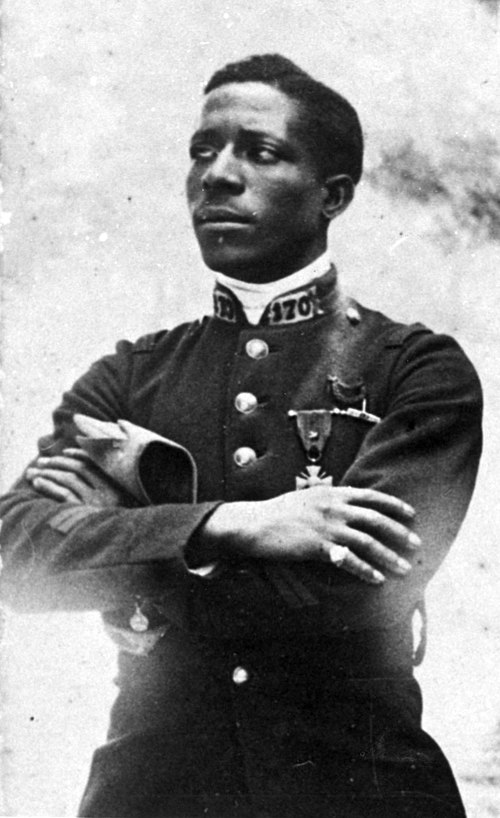
The man he was looking for was an American citizen. He was sixty-four years old. He had been awarded fifteen French military decorations and — six months earlier, in a ceremony in Paris — had been made a Knight of the Légion d’honneur, the highest civilian honor France can give. The medal had been pinned to his chest by the President himself, who had publicly called him un véritable héros français. A true French hero.
The FBI located the man within a few days.
He was operating an elevator at Rockefeller Center in New York City.
The elevator operator’s name was Eugene Bullard. He had been born in Columbus, Georgia, in 1895, the son of a man whose own father had been a slave.
He had run away from Columbus at the age of eleven, after watching a white mob nearly lynch his father.
He spent the next several years drifting through the American South. At sixteen, he stowed away on a German freighter at Norfolk, Virginia. He landed in Aberdeen, Scotland. From there he made his way to London, where he learned to box. By 1913, at eighteen, he was prizefighting in Paris.
When Germany invaded France in August 1914, Bullard was nineteen years old. He had no legal obligation to fight. He had no French citizenship.
He went to the recruiting office on October 19, 1914, and signed up for the French Foreign Legion.
He spent the next eighteen months as an infantryman in some of the worst fighting of the war — at the Somme, at Champagne, at Verdun. He was wounded three times. The third wound, on March 5, 1916, tore open his thigh and left him with permanent damage to his leg.
He was twenty years old. The doctors told him he would not return to the infantry.
He decided he wanted to fly.
In a Paris café in the spring of 1916, while he was recovering, Bullard mentioned to three white American friends that he was thinking of joining the French air service. A Mississippian named Jeff Dickson laughed.
Gene, Dickson said, you know damn well there aren’t any Negroes in aviation.
Bullard answered: Sure do. That’s why I want to get into it. There has to be a first to everything, and I’m going to be the first.
Dickson bet him two thousand dollars he would not make it.
Bullard took the bet. He earned his pilot’s license on May 5, 1917. He won the bet.
He reported to the front in August 1917 and flew approximately twenty combat missions over the next three months in a SPAD VII. The fuselage was painted with a bleeding heart pierced by a knife and the French phrase Tout le Sang qui Coule est Rouge — All Blood that Flows is Red.
He carried, on every combat flight, a small capuchin monkey named Jimmy in the front of his flight jacket.
The French press began calling him L’Hirondelle Noire — the Black Swallow.
When the United States entered the war in 1917, Bullard immediately applied to transfer to the U.S. Army Air Service.
His application was rejected.
The U.S. Army Air Service had a policy, in 1917, of not accepting Black pilots. The other American pilots flying for France in his unit, all of them white, were transferred to the U.S. Air Service.
He was the only one who was not.
For the next twenty years, he was one of the most familiar faces in the Montmartre nightlife of Paris between the wars. He owned a nightclub called L’Escadrille. He spoke fluent French, English, and German. Hemingway drank there. Fitzgerald drank there. Langston Hughes drank there. Josephine Baker performed there. Louis Armstrong was a personal friend.
When Germany invaded Poland in 1939, Bullard was forty-four. His fluent German and his ownership of a nightclub frequented by German officers made him useful to the French Resistance. He became an intelligence agent — eavesdropping in his own bar on conversations between German officers who did not know he understood every word.
When France fell in June 1940, friends in the Resistance smuggled him across the Spanish border before the Gestapo could arrest him.
He came back to the United States for the first time in twenty-eight years.
He arrived in New York with thirty dollars in his pocket and a permanent limp.
He did not return to a hero’s welcome. He returned to a country that had no idea who he was.
He worked at a perfume counter. He worked as a security guard. He worked at the Staten Island shipyards. By the late 1940s, he had taken the job that he would hold for most of the rest of his life.
He operated the elevator at Rockefeller Center.
He was wearing the elevator uniform on the day a producer from NBC came down from the studios upstairs to ask if he was the man Charles de Gaulle had been looking for.
A few weeks later, NBC sent a film crew to interview him in the lobby. The studios where NBC produced The Today Show were on the floors above. He had operated the elevator that took the network executives up to those studios every morning for nearly ten years. He had not been recognized as he did it.
He went back to operating the elevator the following Monday.
He died of stomach cancer on October 12, 1961, three days after his sixty-sixth birthday.
He was buried in the French War Veterans’ section of Flushing Cemetery, in Queens, in the uniform of the French Foreign Legion. The casket was draped with the French flag.
In 1994 — thirty-three years after his death — the United States Air Force formally commissioned Eugene Jacques Bullard as a Second Lieutenant, posthumously.
It was the first commission the U.S. military had ever offered him.
He had been the first Black combat pilot in American history.
The French had been calling him a hero since 1917.
The Americans got around to it in 1994.
RACIAL AWARENESS
I think every human being – Matt Moberg
I think every human being
eventually has a moment
where they are standing outside in sweatpants
that have lost the will to be pants,
holding a trash bag, a divorce, a parking ticket,
or some other receipt from the universe
that says, “surprise, this too is part of it.”
And then the sky bruises purple.
And the air touches your face
like it knows your whole story.
And suddenly you realize:
all the real is actually unreal.
The dirt.
The breath.
The weird little bones in your hands.
The fact that we are here,
on a floating rock with pollen counts,
paying bills,
missing dead people,
loving living people
who say “leaving now”
while still fully naked and looking for socks.
And still,
the moon clocks in.
No applause.
No benefits.
No note from management saying,
“Great work being ancient and luminous again.”
Just the moon,
working nights
like a single mother with no applause,
packing silver lunches
for every dark thing
that still has to rise.
Tell me that isn’t holy.
Tell me there is a better word
than sacred
for the way light keeps returning
with no guarantee
we will actually stop and take note.
I know people who believe in therapy,
probiotics,
tarot,
twelve-step meetings,
manifestation journals,
and waiting exactly eleven minutes
before texting back
so they do not appear emotionally available,
even though their whole nervous system
is standing in the driveway holding flowers.
And underneath all of it,
every ritual,
every doctrine,
every smoothie with chia seeds,
the prayer is the same:
Please let me be loved.
Please let me be forgiven.
Please let this strange little life
mean something
before my lower back
submits its formal resignation.
What is going on?
For real tho—What is this place?
This unbearable tenderness
of being alive long enough
to watch steam lift from coffee in winter
like a soul practicing leaving.
To see your friend laugh so hard
they slap the table
as if joy is a mosquito
they are trying to kill.
To hear a child say “pisghetti”
and, for one shining second,
realize language
has finally been improved.
I know I already noted this in the first piece,
but the older I get,
the less use I have for certainty.
Certainty has never made me pull over
because the sunset looked like God
dropped a jar of peach jam
across the whole midwestern sky
and decided to be lazy
and not clean up.
Certainty has never made me gasp
at rain on hot pavement.
Certainty has never found me
in the cereal aisle,
holding Captain Crunch,
suddenly remembering
that everyone I have ever loved
was made from stardust,
hunger,
and a series of decisions
we probably should have slept on.
No.
It has always been awe.
Awe was the first church.
Before steeples.
Before committees.
Before men got involved
and started making rules about skirts.
Awe was there
with its wild hair
and muddy feet,
saying:
Look.
Look again.
Look until looking
becomes love.
Awe, and soup.
Awe, and someone rubbing your back
when you are sick.
Awe, and old couples at Target
arguing gently about avocados,
as if marriage is not one vow
but ten thousand errands
performed beside the person
who knows exactly
how you like the cart pushed.
Maybe gratitude
was never meant to sound elegant.
Maybe gratitude sounds like:
“Damn.
That woodpecker is trying
to beat that tree from itself.”
Maybe gratitude sounds like:
“Thank you, body,
for continuing to drag me through this world
despite the many slim jims
I have done to you
at gas stations.”
Maybe gratitude sounds like:
“Thank you to the dogs
who lose their entire minds
when we come home
as if we have returned from war
and not Walgreens.”
For me, that might be my gospel.
That joy that does not wait for us
to be impressive but only needs us
to come through the door.
Because the truth is,
this life is devastating.
And ridiculous.
One minute you are 22 and invincible,
driving too fast,
eating gas station nachos
with the confidence of a Greek god.
The next minute you are googling,
“Can sneezing cause a hamstring injury?”
and the answer is,
apparently,
“Welcome to the second half of your life.”
But even now—
even tired,
even grieving,
even emotionally held together
by iced coffee, playlists,
and one very specific wolves hoodie—
we keep finding reasons
to stay soft.
We plant tomatoes
even though grief is real.
We bake bread
even though the news is on fire.
We send photos of the sky
to people we love
with captions like,
“LOOK,”
as if beauty is an emergency
and we are all volunteer firefighters.
We keep saying,
“You have to see this,”
because wonder
is the oldest form
of resurrection.
So here’s to the believers
and the atheists
and the agnostics
and the people whose entire theology
is just trying not to cry
in the DMV line.
Here’s to the people clinging to faith.
Here’s to the people clinging to Xanax
and oat milk
and the one group chat
where nobody pretends to be okay.
Here’s to the tender-hearted weirdos.
The accidental mystics.
The ones who can contemplate mortality
for six straight hours
and then become emotionally attached
to a perfect peach.
The ones who know
despair has a mouth,
but so does laughter.
May we never stop being drop-kicked by beauty
in the middle of a Sunday afternoon.
May we never become so polished
that we forget how to stand
in the Starbucks line of existence
with our dumb, gorgeous hearts open,
feeling the enormity of it all
rattle around in our bones
like thunder
looking for somewhere to laugh.
And may we remember:
whatever else this is,
whatever mess,
whatever miracle,
whatever cosmic group project
no one was prepped for—
all’ve it is astonishing.
that we are here.
that we have loved enough to be ruined.
that the moon keeps showing up.
that bread exists.
So pass it on.
Tear off a piece
with your bare hands.
Take it in as you take it down.
And then go outside and look at that moon.
Poetry
Do You Know What Today Is? – Danez Smith
unfortunately, or blessed, it could have been
hours, or years, but it was hours
we disappeared into, touch i shouldn’t
savor, not this day, not while missing you,
not this deep in love, but a year ago,
or was it days, we said i do
which under it laid dozens more commitments,
one being our commitment to pleasure,
to touch, to the touch of others, so i do
but also i will continue to do it, that it,
with people that are not you—love,
believe it, or not, lives in that promise
too, i love the sounds others pull from you,
i love your ecstasy even if i’m not around
to engineer it, and here i am, on the other
side of the promise, on the other side
of the world, underneath this person
who i have promised nothing
but my attention and effort until it’s done,
and it was, done under the moon
until the rain started and, then, done
under the rain, i am ashamed to say it,
but i must say it: i would have asked them
to stay, to do it again, to touch me forever
had i not, and thank God i did,
placed my forever in you, but amor,
amor, you should have seen it, us:
beneath the rain, a storm,
under the promise,
my loaned breath.