
Templates
now browsing by category
This is for adding content and maintaining the standardized layout.
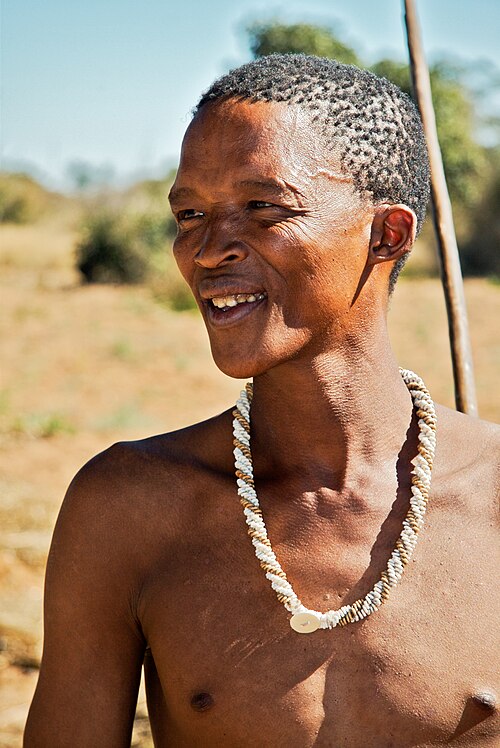
The Silence of the Stars – David Wagoner
When Laurens van der Post one night
In the Kalahari Desert told the Bushmen
He couldn’t hear the stars
Singing, they didn’t believe him. They looked at him,
half-smiling. They examined his face
To see whether he was joking
Or deceiving them. Then two of those small men
Who plant nothing, who have almost
Nothing to hunt, who live
On almost nothing, and with no one
But themselves, led him away
From the crackling thorn-scrub fire
And stood with him under the night sky
And listened. One of them whispered,
Do you not hear them now?
And van der Post listened, not wanting
To disbelieve, but had to answer,
No. They walked him slowly
Like a sick man to the small dim
Circle of firelight and told him
They were terribly sorry,
And he felt even sorrier
For himself and blamed his ancestors
For their strange loss of hearing,
Which was his loss now. On some clear night
When nearby houses have turned off their visions,
When the traffic dwindles, when through streets
Are between sirens and the jets overhead
Are between crossings, when the wind
Is hanging fire in the fir trees,
And the long-eared owl in the neighboring grove
Between calls is regarding his own darkness,
I look at the stars again as I first did
To school myself in the names of constellations
And remember my first sense of their terrible distance,
I can still hear what I thought
At the edge of silence where the inside jokes
Of my heartbeat, my arterial traffic,
The C above high C of my inner ear, myself
Tunelessly humming, but now I know what they are:
My fair share of the music of the spheres
And clusters of ripening stars,
Of the songs from the throats of the old gods
Still tending ever tone-deaf creatures
Through their exiles in the desert.
Poetry
Spider – Andrea Gibson
All of my pain is a spider
I’ve learned not to crush
with the heel of my shoe
but to guide with a page
of my journal
into an empty glass.
I ask questions about
its life, its purpose
as I walk careful
out to the garden and rest
it down on the earth.
My pain—how happy
it is to leave me
whenever I treat it
kind.
Poetry

Acceptance Speech After Setting the World Record in Goosebumps – Andrea Gibson
I wasn’t, by any means, a natural.
Was not one of those wow-hounds
born jaw-dropped. I was tough in the husk.
Went years untouched by rain. Took shelter
seriously, even and often especially
in good weather, my tears like teenagers
hiding under the hoods of my eyes,
so committed they were to never falling
for the joke of astonishment.
When I was told there were seven
wonders of the world, I trusted the math,
believed I had seen none of them.
Of course beauty hunted me.
It hunts everyone. But I outran it, hid
in worry, regret, the promise of an afterlife
or a week’s end.
Then one day, in a red velvet theater
in New Orleans, I watched Maya Angelou
walk on stage. Seventeen slow steps to the mic.
She took a breath before speaking,
and I could hear god being born in that breath.
My every pore reached out like a hand
pointing to the first unsinkable lotus
in the bayou of the universe.
I’d never felt anything like it.
Searched the encyclopedia
for the feeling’s name when I got home:
“Goosebumps.”
Afterwards, I thought—I can do this.
Started training morning to night,
tore the caution tape off my life
and let everything touch it.
Allen Iverson on the television
in his first season with the Sixers,
crossover sharp as a V of sparrows
Flying through the paint like Michelangelo’s brush:
272 goosebumps.
My baby sister, sober for the first time
in thirteen years, calling to tell me
she just noticed our mother’s eyes are green:
505 goosebumps.
One day, my friend scored tickets
to a Prince concert. Tiny venue.
I was right behind the sound booth.
Prince’s entire band that evening—women.
At the end of the show the person
turned around and whispered, He didn’t play
one song on his setlist the whole night.
I live on stages. I know what it is
to scratch a plan, but not the whole trip
and still arrive to your destination
two hundred years before your time:
421 (artist formerly known as) goosebumps.
But that’s just the fancy stuff.
Some of them came from simple facts—
It rains diamonds on Jupiter.
Blood donors in Sweden receive a thank you
message when their blood is used.
One night in Michigan, my friend,
still undiagnosed, could not uncurl
her fingers to strum her guitar,
so she sang the chords instead.
It was the first time in my life I’d seen pain
become an instrument:
10 dozen goosebumps
for each and every note plucked up from
the string section of her refusal to silence
her dream.
After that, nothing in the world was gray.
Even the movie of my past was released
in color. The oldest man in my hometown
could not get to the door to listen
to our carols so we went inside and sang
at his bedside instead. Twenty-four boots
on the front step catching snowflakes
with their tongues: 776 goosebumps.
At one point everything started doing it:
A sincere apology, an enemy’s love poem.
The moon rising over the continental divide.
My love and I thought it was a car
driving off a cliff, and suddenly
nothing in the world was dying.
You ever felt that? A split second
when nothing in the world is dying?
888 goosebumps, and the next day
I sharpened a tiny ax
so I could split the seconds myself.
Too much lives in a moment
to not feed it to the fire in the heart, slow.
A Missoula treehouse filled with candlelight.
The octopus documentary.
The biggest dog in the shelter
hiding behind a teacup chihuahua,
and the woman who came to adopt a cat
taking all three of them home.
Me, at home, two months into chemotherapy
watching all of my eyelashes fall onto my cheekbones
and realizing that was 400 wishes
I wouldn’t have made otherwise.
There is no escaping
the magic now. Beauty caught me
and never let me go.
And the thing about the world record
is—if someone breaks it after me,
and they will break it after me,
I will love that so much
that without even trying,
I’ll break it again.
Poetry
Detour – Ruth Feldman
I took a long time getting here,
much of it wasted on wrong turns,
back roads riddled by ruts.
I had adventures
I never would have known
if I proceeded as
the crow flies.
Super highways are so sure
of where they are going:
they arrive too soon.
A straight line isn’t always
the shortest distance
between two people.
Sometimes I act as though
I’m heading somewhere else
while, imperceptibly,
I narrow the gap between you and me.
I’m not sure I’ll ever
know the right way, but I don’t mind
getting lost now and then.
Maps don’t know everything
Poetry
Gate A-4 – Naomi Shihab Nye
Wandering around the Albuquerque Airport Terminal, after learning
my flight had been delayed four hours, I heard an announcement:
“If anyone in the vicinity of Gate A-4 understands any Arabic, please
come to the gate immediately.”
Well—one pauses these days. Gate A-4 was my own gate. I went there.
An older woman in full traditional Palestinian embroidered dress, just
like my grandma wore, was crumpled to the floor, wailing. “Help,”
said the flight agent. “Talk to her. What is her problem? We
told her the flight was going to be late and she did this.”
I stooped to put my arm around the woman and spoke haltingly.
“Shu-dow-a, Shu-bid-uck Habibti? Stani schway, Min fadlick, Shu-bit-
se-wee?” The minute she heard any words she knew, however poorly
used, she stopped crying. She thought the flight had been cancelled
entirely. She needed to be in El Paso for major medical treatment the
next day. I said, “No, we’re fine, you’ll get there, just later, who is
picking you up? Let’s call him.”
We called her son, I spoke with him in English. I told him I would
stay with his mother till we got on the plane and ride next to
her. She talked to him. Then we called her other sons just
for the fun of it. Then we called my dad and he and she spoke for a while
in Arabic and found out of course they had ten shared friends. Then I
thought just for the heck of it why not call some Palestinian poets I know
and let them chat with her? This all took up two hours.
She was laughing a lot by then. Telling of her life, patting my knee,
answering questions. She had pulled a sack of homemademamool
cookies—little powdered sugar crumbly mounds stuffed with dates and
nuts—from her bag—and was offering them to all the women at the gate.
To my amazement, not a single woman declined one. It was like a
sacrament. The traveler from Argentina, the mom from California, the
lovely woman from Laredo—we were all covered with the same powdered
sugar. And smiling. There is no better cookie.
And then the airline broke out free apple juice from huge coolers and two
little girls from our flight ran around serving it and they
were covered with powdered sugar, too. And I noticed my new best friend—
by now we were holding hands—had a potted plant poking out of her bag,
some medicinal thing, with green furry leaves. Such an old country tradi-
tion. Always carry a plant. Always stay rooted to somewhere.
And I looked around that gate of late and weary ones and I thought, This
is the world I want to live in. The shared world. Not a single person in that
gate—once the crying of confusion stopped—seemed apprehensive about
any other person. They took the cookies. I wanted to hug all those other women, too.
This can still happen anywhere. Not everything is lost.
Poetry
The Holy Longing – J.W. von Goethe
Tell a wise person, or else keep silent,
because the mass man will mock it right away.
I praise what is truly alive,
what longs
In the calm water of the love-nights,
where you were begotten, where you have begotten,
a strange feeling comes over you,
when you see the silent candle burning.
Now you are no longer caught in the obsession with darkness,
and a desire for higher love-making sweeps you upward.
Love at First Sight – Wisława Szymborska
They’re both convinced
that a sudden passion joined them.
Such certainty is beautiful,
but uncertainty is more beautiful still.
Since they’d never met before, they’re sure
that there’d been nothing between them.
But what’s the word from the streets, staircases, hallways—
perhaps they’ve passed by each other a million times?
I want to ask them
if they don’t remember—
a moment face to face
in some revolving door?
perhaps a “sorry” muttered in a crowd?
a curt “wrong number” caught in the receiver?—
but I know the answer.
No, they don’t remember.
They’d be amazed to hear
that Chance has been toying with them
now for years.
Not quite ready yet
to become their Destiny,
it pushed them close, drove them apart,
it barred their path,
stifling a laugh,
and then leaped aside.
There were signs and signals,
even if they couldn’t read them yet.
Perhaps three years ago
or just last Tuesday
a certain leaf fluttered
from one shoulder to another?
Something was dropped and then picked up.
Who knows, maybe the ball that vanished
into childhood’s thicket?
There were doorknobs and doorbells
where one touch had covered another
beforehand.
Suitcases checked and standing side by side.
One night, perhaps, the same dream,
grown hazy by morning.
Every beginning
is only a sequel, after all,
and the book of events
is always open halfway through.
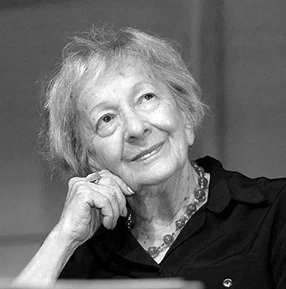
The Lost Hotels of Paris – Jack Gilbert
The Lord gives everything and charges
by taking it back. What a bargain.
Like being young for a while. We are
allowed to visit hearts of women,
to go into their bodies so we feel
no longer alone. We are permitted
romantic love with its bounty and half-life
of two years. It is right to mourn
for the small hotels of Paris that used to be
when we used to be. My mansard looking
down on Notre Dame every morning is gone,
and me listening to the bell at night.
Venice is no more. The best Greek Islands
have drowned in acceleration. But it’s the having
not the keeping that is the treasure.
Ginsberg came to my house one afternoon
and said he was giving up poetry
because it told lies, that language distorts.
I agreed, but asked what we have
that gets it right even that much.
We look up at the stars and they are
not there. We see the memory
of when they were, once upon a time.
And that too is more than enough.
Poetry
Telephone Booth (number 905 1/2) – Pedro Pietri
woke up this morning
feeling excellent,
picked up the telephone
dialed the number of
my equal opportunity employer
to inform him I will not
be into work today
Are you feeling sick?
the boss asked me
No Sir I replied:
I am feeling too good
to report to work today,
if I feel sick tomorrow
I will come in early
Poetry
Bridges
Here is an aspect of New York
The majestic city
On 153 St
Where heaven and earth come together
In six lane highways that never sleep
And graveyards
Where once people sleep forever
Where the most marvelous bridges
Span the most magnificent river
And a tiny lighthouse
Sits dwarfed beneath miraculous towers
Staring forever at the flowing Hudson
The boats at night
Illuminated beneath the beloved bridge
A miracle of correspondence
Uniter of states, of families
And regal palisades
Ancient gravestones sunk into soil
Reflect the moon on all Manhattan
The fish beneath the water
The fallen
Paintings brought home
From junkyards in France
Carvings and cravings
The expression of Africans
Books and bottles
Darkness and light
Consumed and consuming
Eternal, finite, beloved island
Home of the Weckquaesgeeks
Dancers and fish spearers
Nomadic hunters
Camped on the river
Making kettles of bark
In their canoes
Sacred Algonquin island
Decimated entirely in a holocaust
Wrought by greedy, armed, sick
Mercenaries and missionaries
Their sachem taken captive
Negotiates a treaty of peace
And the island is bought
From those who do not own it.
Generations and centuries flow by
And people live here still
Want to live here
In the millions
The soil good
The rivers rich
The hunting blessed
There are magnificent bridges
To what is known
And shall never be known
Where heaven and earth come together
In six lane highways
Along the river
POETRY