
Archives
now browsing by author
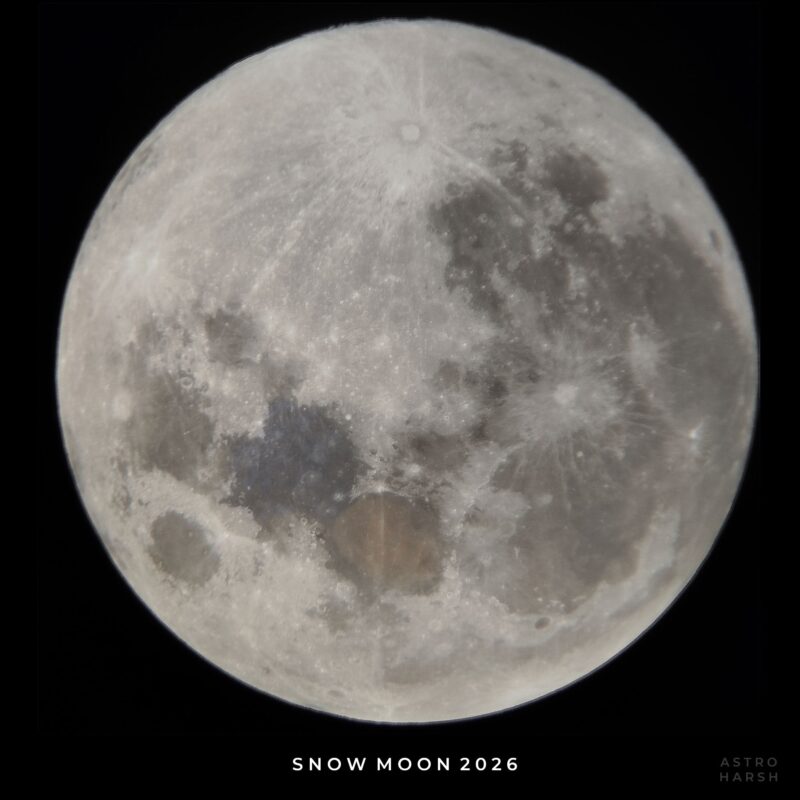
The Moon is Full Tonight – Billy Collins
The moon is full tonight ….
It’s as full as it was
in that poem by Coleridge
where he carries his year-old son
into the orchard behind the cottage
and turns the baby’s face to the sky
to see for the first time
the earth’s bright companion,
something amazing to make his crying seem small.
And if you wanted to follow this example,
tonight would be the night
to carry some tiny creature outside
and introduce him to the moon.
And if your house has no child,
you can always gather into your arms
the sleeping infant of yourself,
as I have done tonight,
and carry him outdoors,
all limp in his tattered blanket,
making sure to steady his lolling head
with the palm of your hand.
And while the wind ruffles the pear trees
in the corner of the orchard
and dark roses wave against a stone wall,
you can turn him on your shoulder
and walk in circles on the lawn
drunk with the light.
You can lift him up into the sky,
your eyes nearly as wide as his,
as the moon climbs high into the night.
Poetry
Trials
This is what it’s about. The clients are all guilty. The possibility of plea negotiations are non-existent because the penalties are as severe with a plea as with a guilty verdict. There is nothing to lose by trying the case except the case. I know the clients don’t stand a chance. I tell them so. It will be exclusively the police’s word against their word, more often, against their silence. The jurors listen. Cracks appear in the government’s case. Testimony is shown to be inconsistent. There are gaps in the story. Areas of interpretation, perhaps even doubt, begin to appear. At final argument I tell the jurors, “look, ladies and gentlemen, maybe the defendant did do what the government alleges he did, but ‘maybe’ isn’t enough, even ‘more probably than not’ is not enough. Ladies and gentlemen, the government must prove that this good person on trial did “x,” “y,” and “z.” And must prove that the defendant committed each and every element of the crime charged, beyond a reasonable doubt. And there are certain reasonable doubts, which I suggest you might consider in your deliberations. And not only that, but the government must also prove the defendant’s knowledge, and the defendant’s intent. And they must prove that knowledge and intent beyond a reasonable doubt, etc.” And in most criminal trials, by the end I am believing my own story. And I have reasonable doubts, or at least they seem reasonable to me. And the jury comes back with a question. And you know they’re struggling with the case, attempting to grapple with their doubts and their differences. And the court officers and the clerks tell you what a smashing wonderful job you did and how you just might have snatched victory out of the jaws of defeat. And against all your better judgment and experience you start to say maybe, just maybe, the verdict will be not guilty. Why in point of fact, it almost has to be not guilty. And then the jury returns. And they’re not looking at you. And the foreperson is asked, “what say you, madam foreperson, is the defendant guilty of not guilty?” And the forelady says, “Guilty.” “And thus say you too ladies and gentlemen of the jury?” And the jurors all nod their assent, and the judge gives them a little speech about duty and freedom, and some of the ladies cry, and the jurors file out, and the government moves for sentencing, and the judge politely listens to your arguments, and the client shakes your hand, and you say, “sorry, man,” and the guy says, “you did the best you could,” and looks you in the eye, bravely or stunned, and is placed in handcuffs and led off to jail.
Am I doing something wrong? Trying too hard with jurors who know they’re being sold a line by me? Just on the wrong side of the case? Trying to see that justice is done. Not sure what is just.
LAW STORIES

KINDNESS – Naomi Shihab Nye
Before you know what kindness really is
you must lose things,
feel the future dissolve in a moment
like salt in a weakened broth.
What you held in your hand,
what you counted and carefully saved,
all this must go so you know
how desolate the landscape can be
between the regions of kindness.
How you ride and ride
thinking the bus will never stop,
the passengers eating maize and chicken
will stare out the window forever.
Before you learn the tender gravity of kindness
you must travel where the Indian in a white poncho
lies dead by the side of the road.
You must see how this could be you,
how he too was someone
who journeyed through the night with plans
and the simple breath that kept him alive.
Before you know kindness as the deepest thing inside,
you must know sorrow as the other deepest thing.
You must wake up with sorrow.
You must speak to it till your voice
catches the thread of all sorrows
and you see the size of the cloth.
Then it is only kindness that makes sense anymore,
only kindness that ties your shoes
and sends you out into the day to gaze at bread,
only kindness that raises its head
from the crowd of the world to say
It is I you have been looking f
and then goes with you everywhere
like a shadow or a friend.
Poetry
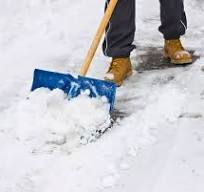
Shoveling Snow With Buddha – Billy Collins
In the usual iconography of the temple or the local Wok
you would never see him doing such a thing,
tossing the dry snow over a mountain
of his bare, round shoulder,
his hair tied in a knot,
a model of concentration.
Sitting is more his speed, if that is the word
for what he does, or does not do.
Even the season is wrong for him.
In all his manifestations, is it not warm or slightly humid?
Is this not implied by his serene expression,
that smile so wide it wraps itself around the waist of the universe?
But here we are, working our way down the driveway,
one shovelful at a time.
We toss the light powder into the clear air.
We feel the cold mist on our faces.
And with every heave we disappear
and become lost to each other
in these sudden clouds of our own making,
these fountain-bursts of snow.
This is so much better than a sermon in church,
I say out loud, but Buddha keeps on shoveling.
This is the true religion, the religion of snow,
and sunlight and winter geese barking in the sky,
I say, but he is too busy to hear me.
He has thrown himself into shoveling snow
as if it were the purpose of existence,
as if the sign of a perfect life were a clear driveway
you could back the car down easily
and drive off into the vanities of the world
with a broken heater fan and a song on the radio.
All morning long we work side by side,
me with my commentary
and he inside his generous pocket of silence,
until the hour is nearly noon
and the snow is piled high all around us;
then, I hear him speak.
After this, he asks,
can we go inside and play cards?
Certainly, I reply, and I will heat some milk
and bring cups of hot chocolate to the table
while you shuffle the deck.
and our boots stand dripping by the door.
Aaah, says the Buddha, lifting his eyes
and leaning for a moment on his shovel
before he drives the thin blade again
deep into the glittering white snow.
Poetry
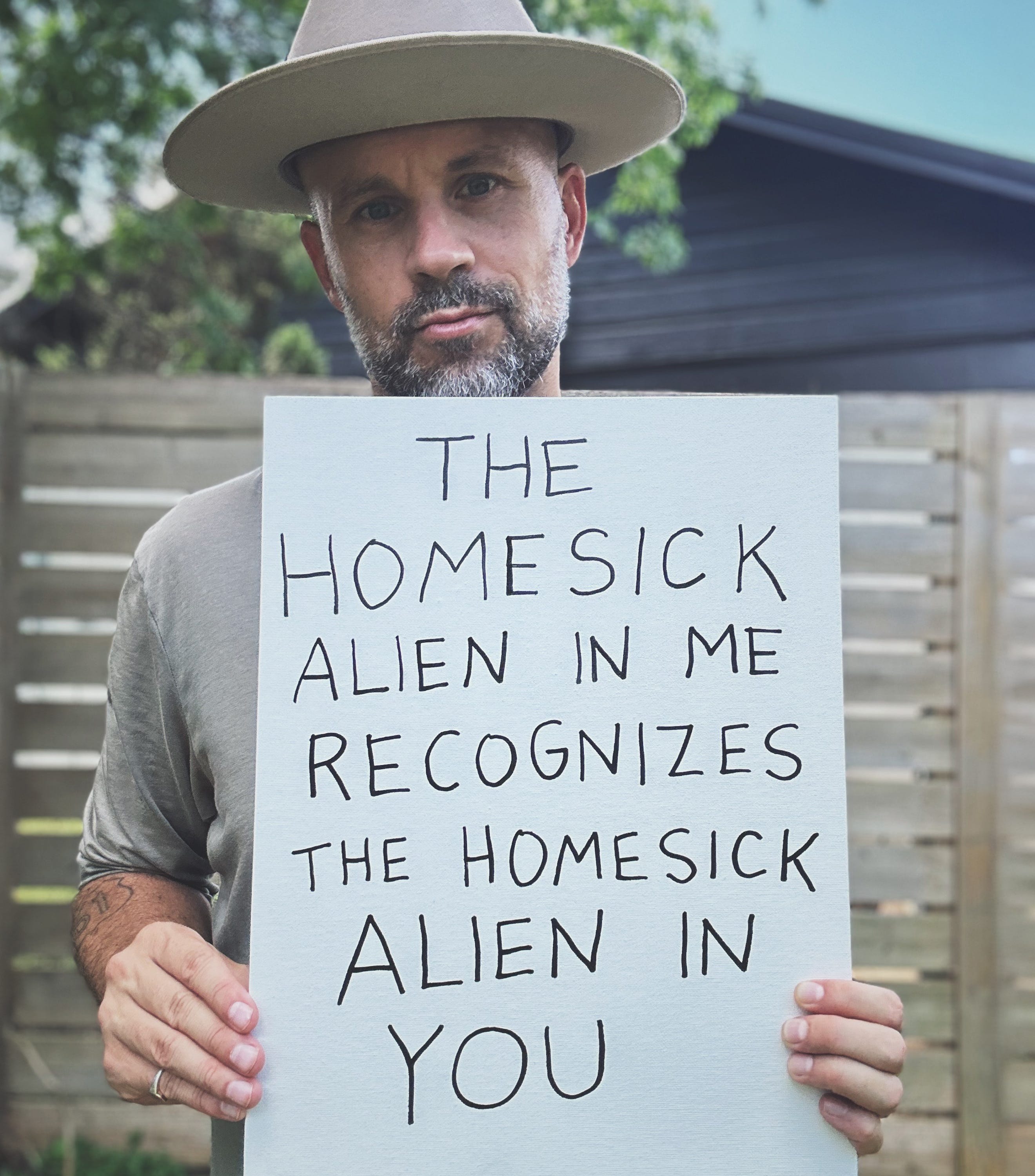
Instructions before visiting Earth – James McCrae
In the event that you wake up
and find your soul separated from source
and manifest into material form, don’t panic.
Your condition is only temporary.
You have been selected for the opportunity
of human incarnation.
This 3D simulation is designed
to break up the monotony of eternity
by giving you a fully immersive experience
as a distinct ego identity.
Your body will serve
as your physical avatar
as you navigate a dense and dramatic reality.
There will be many distractions
causing you to forget your true nature and origin.
You will experience a range of emotions
from joy to loneliness to despair.
But remember – no matter
what trials and traumas you encounter,
your soul remains perfectly safe.
At times you may feel lost or afraid.
This is totally normal.
If you ever need guidance,
simply slow down your busy mind
and bring your awareness
to the quiet place
inside yourself.
On this planet, nothing is permanent.
People and things will come and go.
You will fall in love and form sentimental attachments
only to lose everything you hold dear.
So cling to nothing too tightly, even yourself,
and when it’s time to let go, let go with grace,
for nothing is owned, only borrowed.
As you walk among
the people on the planet,
try to be a good guest.
Tread lightly. Remember
that you are only visiting.
Don’t make a mess.
Listen more than you speak.
Give more than you take.
Don’t keep your soft heart
locked inside a glass cage,
protected from wear and tear.
You’ll never make it out alive
and time passes quickly.
So come back with some battle scars
and good stories to tell.
Poetry
Epistle
There are these elements and aspects of the sand painting that is my life:
Work, friendship, worship, love, sex, loss, women, men, Maia, my family,
Political questions, ethics, values, investment, expectation, reward,
Success, failure, accomplishment, mastery, longing, joy,
Engagement, stimulation, trepidation, the Word itself,
Fear, habit, breath, death, health, running, eating, other bodily functions,
Music, counting money, trying hard, not trying at all, giving a damn,
Being open, being hurt, helping, the unknown,
Housecleaning, laundry, dishes, cooking, shopping, driving,
Arranging baby sitters, writing, reading, shaving and showering,
Weighing myself, making love, talking to crows,
Seeing butterflies, horses, turtles, and birds in profuse array,
flying, scurrying, or dead in the highway.
I live my life.
I pay the bills.
I remember always the vast mystery I participate in,
This vast liveliness, this immense universe where goodness abounds,
Where illness, injury, depression, pain, and death stalk everyone inevitably.
Where by the greatest of luck, and some effort, I walk
my current, common, narrow, blessed, simple, single path.
Where hope, fear, fantasies, and realities whisper breezily about me.
Where time passes slowly and in the wink of an eye.
Where love that is strong one moment is faded the next.
The nonstop changing that I hold onto, adjust to, anticipate and hallucinate.
This is the peeling birch bark, snakeskin shedding, noon whistle time.
Understanding evolves. Understanding is illusion.
I am momentary. pleased, cautious, strong, ambitious, quixotic, romantic,
Thankful, awestruck, blissful, present, past, and future,
Changeless and forever, daily, divine, and never,
Before me, after me, regardless of me and mine.
We pause in the stream of life
The waters are rushing swiftly
We touch, smile at, and puzzle one another
We struggle against the current,
We follow the path of least resistance.
We are none of us the Grand Canyon, nor the Colorado River.
I have had occasion to love you.
November, 1976
POETRY

How She Heard It – Todd Davis
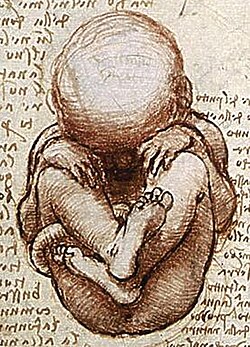
Your father gathered what was left
after the birth, slick sack of salt
and blood coloring his hands
warm from my body. He couldn’t help
that it felt the same as when I took him
inside me, drew him out of himself
to be joined with what we were making.
At the edge of our small orchard
he settled the plum seedling
he’d started three years before,
snugged roots in the hole to eat
the placenta. The part of you
you didn’t need fed the tree,
and when you turned six,
you ate from the branches.
Your small hands clasping the dark
shiny skin as you bit the saffron flesh,
juice dribbling at chin, smell as sweet
as the sugar you were born in.
Poetry
Wendell Berry – Two Poems
The Future
For God’s sake, be done
with this jabber of “a better world.”
What blasphemy! No “futuristic”
twit or child thereof ever
in embodied light will see
a better world than this, though they
foretell inevitably a worse.
Do something! Go cut the weeds
beside the oblivious road. Pick up
the cans and bottles, old tires,
and dead predictions. No future
can be stuffed into this presence
except by being dead. The day is
clear and bright, and overhead
the sun not yet half finished
with his daily praise.
There’s No Going Back
No, no, there is no going back.
Less and less you are
that possibility you were.
More and more you have become
those lives and deaths
that have belonged to you.
You have become a sort of grave
containing much that was
and is no more in time, beloved
then, now, and always.
And so you have become a sort of tree
standing over a grave.
Now more than ever you can be
generous toward each day
that comes, young, to disappear
forever, and yet remain
unaging in the mind.
Every day you have less reason
not to give yourself away.
Poetry
For Calling the Spirit Back from Wandering the Earth in Its Human Feet – Joy Harjo
Put down that bag of potato chips, that white bread, that bottle of pop.
Turn off that cellphone, computer, and remote control.
Open the door, then close it behind you.
Take a breath offered by friendly winds. They travel the earth gathering essences of plants to clean.
Give it back with gratitude.
If you sing it will give your spirit lift to fly to the stars’ ears and back.
Acknowledge this earth who has cared for you since you were a dream planting itself precisely within your parents’ desire.
Let your moccasin feet take you to the encampment of the guardians who have known you before time, who will be there after time. They sit before the fire that has been there without time.
Let the earth stabilize your postcolonial insecure jitters.
Be respectful of the small insects, birds and animal people who accompany you.
Ask their forgiveness for the harm we humans have brought down upon them.
Don’t worry.
The heart knows the way though there may be high-rises, interstates, checkpoints, armed soldiers, massacres, wars, and those who will despise you because they despise themselves.
The journey might take you a few hours, a day, a year, a few years, a hundred, a thousand or even more.
Watch your mind. Without training it might run away and leave your heart for the immense human feast set by the thieves of time.
Do not hold regrets.
When you find your way to the circle, to the fire kept burning by the keepers of your soul, you will be welcomed.
You must clean yourself with cedar, sage, or other healing plant.
Cut the ties you have to failure and shame.
Let go the pain you are holding in your mind, your shoulders, your heart, all the way to your feet. Let go the pain of your ancestors to make way for those who are heading in our direction.
Ask for forgiveness.
Call upon the help of those who love you. These helpers take many forms: animal, element, bird, angel, saint, stone, or ancestor.
Call your spirit back. It may be caught in corners and creases of shame, judgment, and human abuse.
You must call in a way that your spirit will want to return.
Speak to it as you would to a beloved child.
Welcome your spirit back from its wandering. It may return in pieces, in tatters. Gather them together. They will be happy to be found after being lost for so long.
Your spirit will need to sleep awhile after it is bathed and given clean clothes.
Now you can have a party. Invite everyone you know who loves and supports you. Keep room for those who have no place else to go.
Make a giveaway, and remember, keep the speeches short.
Then, you must do this: help the next person find their way through the dark.
***
Joy Harjo was born in Tulsa, Oklahoma, in 1951, and is a member of the Mvskoke/Creek Nation. She is the author of several books of poetry, including An American Sunrise, and Conflict Resolution for Holy Beings. She was the United States poet laureate from 2019-22 the dark.
Poetry

Dismiss Whatever Insults Your Own Soul – Walt Whitman
This is what you shall do;
Love the earth and sun and the animals,
despise riches,
give alms to every one that asks,
stand up for the stupid and crazy,
devote your income and labor to others,
hate tyrants,
argue not concerning God,
have patience and indulgence toward the people,
take off your hat to nothing known
or unknown
or to any man or number of men,
go freely with powerful uneducated persons
and with the young
and with the mothers of families,
read these leaves in the open air every season
of every year of your life,
re-examine all you have been told
at school or church or in any book,
dismiss whatever insults your own soul,
and your very flesh shall be a great poem
and have the richest fluency not only in its words
but in the silent lines of its lips and face
and between the lashes of your eyes
and in every motion and joint of your body.
Poetry