
Archives
now browsing by author
A Moment of Silence – Emmanuel Ortiz
Before I start this poem, I’d like to ask you to join me in a moment
of silence in honor of those who died in the World Trade Center and
the Pentagon last September 11th.
I would also like to ask you to offer up a moment of silence for all
of those who have been harassed, imprisoned, disappeared, tortured, raped, or killed in retaliation for those strikes, for the victims in both Afghanistan and the U.S.
And if I could just add one more thing…
A full day of silence for the tens of thousands of Palestinians who
have died at the hands of U.S.-backed Israeli forces over decades of
occupation.
Six months of silence for the million and-a-half Iraqi people, mostly
children, who have died of malnourishment or starvation as a result of an 11-year U.S. embargo against the country.
Before I begin this poem, two months of silence for the Blacks under
Apartheid in South Africa, where homeland security made them aliens in their own country
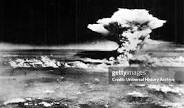
Nine months of silence for the dead in Hiroshima and Nagasaki, where death rained down and peeled back every layer of concrete, steel, earth and skin and the survivors went on as if alive.
A year of silence for the millions of dead in Viet Nam—a people, not a
war—for those who know a thing or two about the scent of burning fuel, their relatives’ bones buried in it, their babies born of it.
A year of silence for the dead in Cambodia and Laos, victims of a
secret war … ssssshhhhh …. Say nothing … we don’t want them to
learn that they are dead.
Two months of silence for the decades of dead in Colombia, whose
names, like the corpses they once represented, have piled up and
slipped off our tongues.
Before I begin this poem,
An hour of silence for El Salvador…
An afternoon of silence for Nicaragua…
Two days of silence for the Guetmaltecos…
None of whom ever knew a moment of peace in their living years.
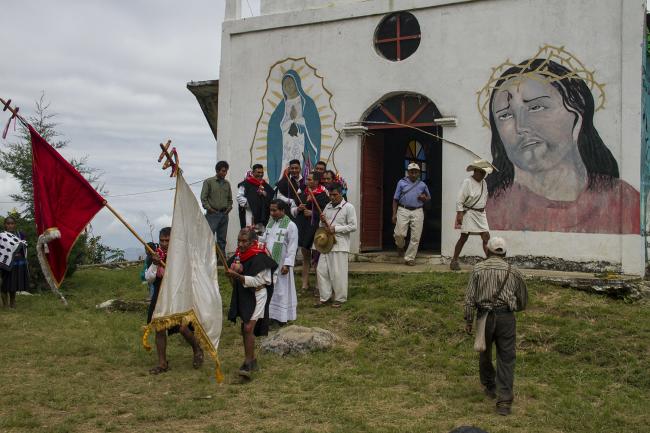
45 seconds of silence for the 45 dead at Acteal, Chiapas
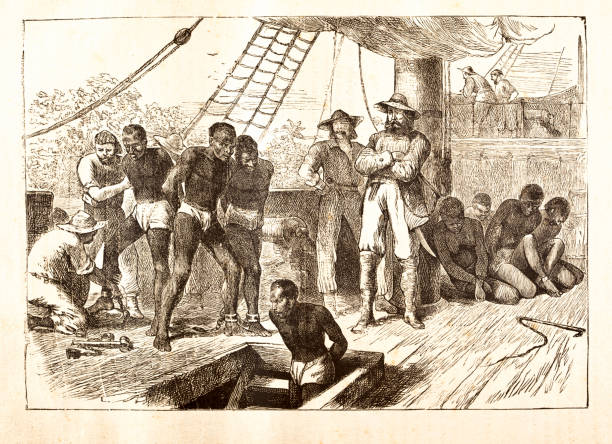
25 years of silence for the hundred million Africans who found their graves far deeper in the ocean than any building could poke into the sky.
There will be no DNA testing or dental records to identify their remains.
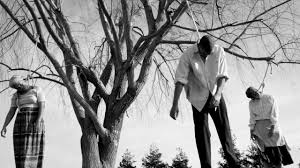
And for those who were strung and swung from the heights of sycamore trees in the south, the north, the east, the west … 100 years of silence …
For the hundreds of millions of indigenous peoples from this half of right here,
Whose land and lives were stolen,
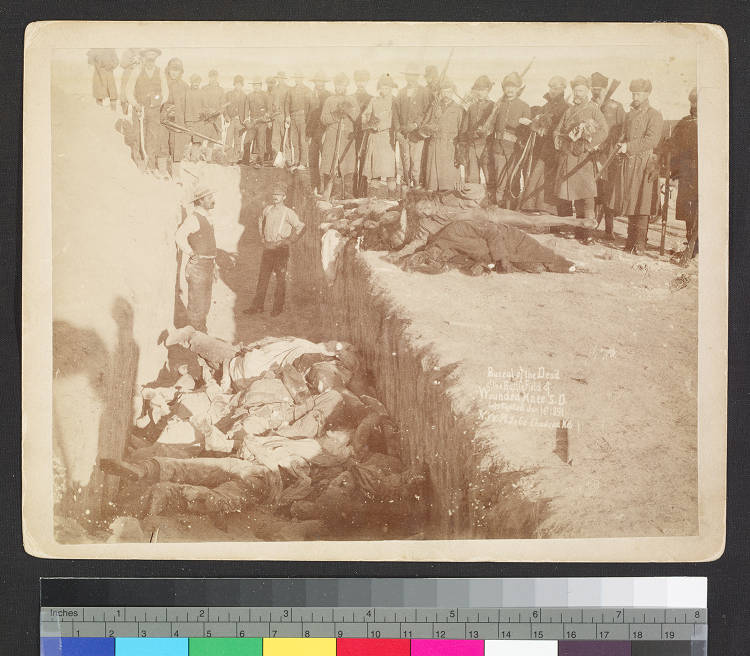
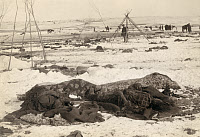
In postcard-perfect plots like Pine Ridge, Wounded Knee, Sand Creek, Fallen Timbers, or the Trail of Tears.
Names now reduced to innocuous magnetic poetry on the refrigerator of our consciousness …
So you want a moment of silence?
And we are all left speechless
Our tongues snatched from our mouths
Our eyes stapled shut
A moment of silence
And the poets have all been laid to rest
The drums disintegrating into dust
Before I begin this poem,
You want a moment of silence
You mourn now as if the world will never be the same
And the rest of us hope to hell it won’t be.
Not like it always has been
Because this is not a 9-1-1 poem
This is a 9/10 poem,
It is a 9/9 poem,
A 9/8 poem,
A 9/7 poem
This is a 1492 poem.
This is a poem about what causes poems like this to be written
And if this is a 9/11 poem, then
This is a September 11th poem for Chile, 1971
This is a September 12th poem for Steven Biko in South Africa, 1977
This is a September 13th poem for the brothers at Attica Prison, New York, 1971.
This is a September 14th poem for Somalia, 1992.
This is a poem for every date that falls to the ground in ashes
This is a poem for the 110 stories that were never told
The 110 stories that history chose not to write in textbooks
The 110 stories that that CNN, BBC, The New York Times, and Newsweek ignored
This is a poem for interrupting this program.
And still you want a moment of silence for your dead?
We could give you lifetimes of empty:
The unmarked graves
The lost languages
The uprooted trees and histories
The dead stares on the faces of nameless children
Before I start this poem we could be silent forever
Or just long enough to hunger,
For the dust to bury us
And you would still ask us
For more of our silence.
If you want a moment of silence
Then stop the oil pumps
Turn off the engines and the televisions
Sink the cruise ships
Crash the stock markets
Unplug the marquee lights,
Delete the instant messages,
Derail the trains, the light rail transit
If you want a moment of silence, put a brick through the window of Taco Bell,
And pay the workers for wages lost
Tear down the liquor stores,
The townhouses, the White Houses, the jailhouses, the Penthouses and the Playboys.
If you want a moment of silence,
Then take it
On Super Bowl Sunday,
The Fourth of July
During Dayton’s 13 hour sale
Or the next time your white guilt fills the room where my beautiful people have gathered
You want a moment of silence
Then take it
Now,
Before this poem begins.
Here, in the echo of my voice,
In the pause between goosesteps of the second hand
In the space between bodies in embrace,
Here is your silence
Take it.
But take it all
Don’ t cut in line.
Let your silence begin at the beginning of crime.
But we,
Tonight we will keep right on singing
For our dead.
— Emmanuel Ortiz 9.11.02
Poetry

A Dog Has Died – Pablo Neruda
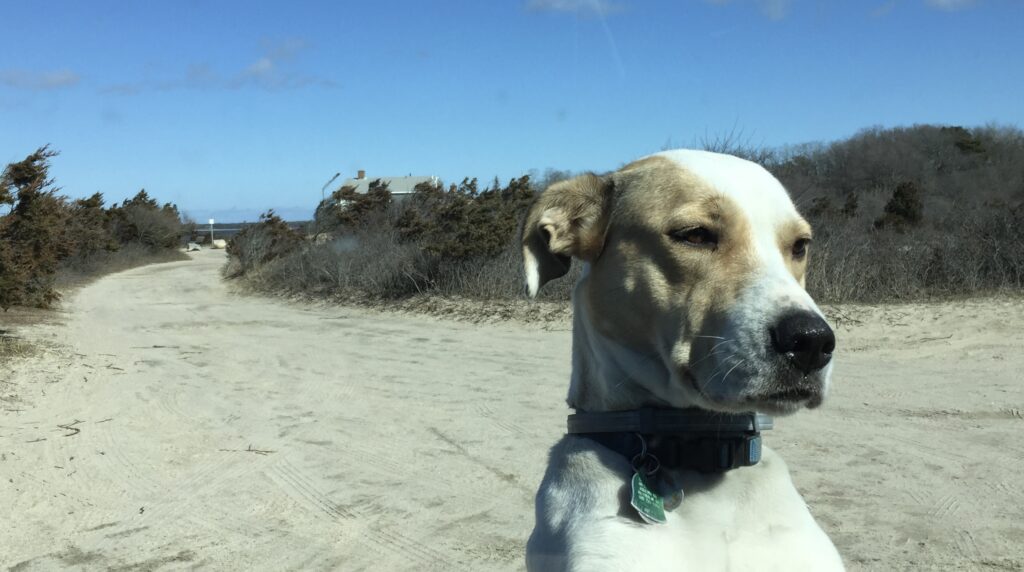
My dog has died.
I buried him in the garden
Beside an old rusted machine,
In the same spot, neither lower down,
Nor higher up,
He will join up with me some day.
Now he’s gone off with his cold nose,
Hairy coat and bad education.
And I, materialist that I am,
Who do not believe in the celestial
Promised Land for any human
For this dog or for any dog,
I do believe in heaven, yes, I believe
In a heaven where I shall not enter,
But he will be waiting for me
Waving his fan-shaped tail
So that I shall have friends when I arrive.
Oh I shall not tell the sadness on the earth
For not having him any more as companion,
He who was never for me a servant.
He showed towards me the friendship of a hedgehog
That preserved its sovereignty,
The friendship of an independent star
Without more intimacy than was necessary,
Without going to extremes:
He would never climb over my clothes
Covering me with hairs and mange,
Nor would he rub up against my knee
Like other sexually obsessed dogs.
No, my dog would look at me,
Giving me the attention that I need,
The necessary attention
To make a vain person like me understand
That, as he was a dog
With eyes purer than mine,
I was wasting his time, but he would look at me
With the look that his silent life,
All his gentle, hairy life
Reserved for me,
Near me, without ever annoying me
And without asking anything from me.
Oh how many times did I want to have a tail
And go bounding along beside him on the sea shore,
In the Isla negra wintertime,
In the big, solitary open spaces; up there the air
And its ice-cold birds,
And my dog jumping, hairy, full
of marine voltage in motion:
My dog roving around and all nose,
And golden tail stuck high in the air
In front of the Ocean and its foam.
Happy, happy, happy
In the way that dogs know how to be happy,
With nothing else, with the absolutism
Of barefaced nature.
There are no goodbyes for my dog who has died.
And there are not, nor ever were, lies between us.
He has gone now and I buried him, and that’s all
there is to it.
Poetry
Coyote in the Headlights
I am here
Caught in the headlights
Frightened and calm
Not knowing where best to run
But sure I can get there
Well, mostly sure.
It’s that damn cat I bet
The one with the green collar
That tasted so good
And then those signs springing up everywhere
With pictures of her!
Like mushrooms after rain
Stapled to every tree it seemed
Saying the foolish thing was missing.
Missing?
You mean consumed, my suppliers
I know where she is
Just check the scat.
And yes, I see you too
I see you all the time
You’re in my dreams
And in my myths
As I’m in yours,
Friends all around
Right?
So turn off the damn lights
And let’s slide into the woods together.
© B.R.Taub, 10/07
POETRY

Honoring Sitting Bull

When most people think of December, what comes to mind might be the holidays we celebrate, gathering with family, and the turning of the page to a new year at month’s end. In Lakota Country, unfortunately, the end of the Gregorian calendar year is also inextricably linked with a pair of troubling anniversaries. In solidarity with us, I hope you’ll make a little room to remember them with me today.
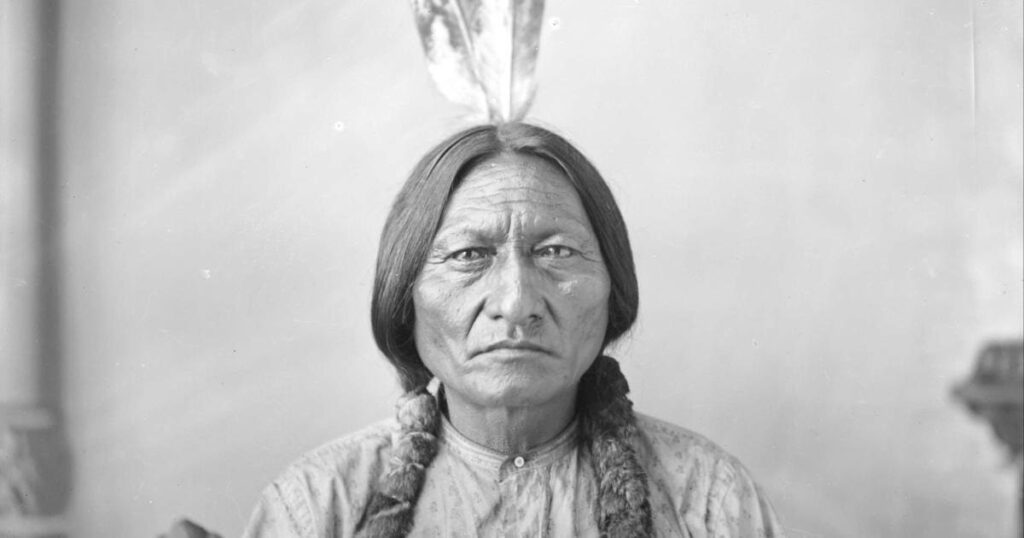
First, Dec. 15, 2024 is the 134th anniversary of the assassination of the great Hunkpapa Lakota Chief, Thatanka Iyotake, or Sitting Bull. I, too, am Hunkpapa Lakota, and I’ll say that Sitting Bull is one of our most celebrated ancestors for good reason. To learn more, I urge you to read (or reread) this blog, which I penned last year to give you more about Sitting Bull’s life, the context of his death, and an action you can take and share to rescind Medals of Honor granted to U.S. soldiers responsible for the second anniversary I referenced: the massacre of hundreds of Natives at Wounded Knee just days later, on Dec. 29, 1890.
Photograph of Sitting Bull by David Francis Barry, circa 1883.
Tied to both of those anniversaries, I’ve been doing research and thinking a lot about the unique, historic nature of policing in Indian Country. In general, cops have never been especially friendly to us — even when they are from our communities. They have always been in direct correspondence with and there to enforce rules made by American governmental officials and corporate institutions that we all face together, even today. In turn, those entities have frequently displayed genocidal intentions and undertaken endeavors, from the Wounded Knee Massacre and the murder of Sitting Bull to railroading pipelines through our sacred lands, meant to degrade or eliminate tribal nations (or, potentially, anyone demonstrating the will to defend American lands and waters).
In our last message, my father thanked U.S. Secretary of the Interior Deb Haaland (Pueblo of Laguna) for her service over the past four years. Let it not be lost on anyone the importance of a Native woman occupying that seat, because for many years, her department was (and sometimes still is) a great nemesis to our communities.
And that brings us back to Sitting Bull. In 1890, the Indian agent James McLaughlin, overseen by the U.S. military and the Secretary of the Interior, ordered him taken into custody. As 43 policemen and volunteers arrived that sad morning at the chief’s house and announced his arrest, a crowd of community members gathered at the commotion and began to protest. 150 Lakota arrived to protect him, and his son then led a group who attempted to free Sitting Bull from police custody.
Bureau of Indian Affairs police lieutenant Henry Bullhead and police sergeant Charles Shavehead, who bracketed Sitting Bull to prevent his escape, were shot. Mortally wounded, Bullhead then murdered Sitting Bull, shooting him in the ribs. Indian agent Red Tomahawk, who’d been behind Sitting Bull, then assumed command of the police. The ensuing fight resulted in the deaths of six police and eight Lakota protectors. After Thatanka Iyotake’s assassination, his people fled to join Spotted Elk (the brother of Iron Eyes, from whom my family takes its name). Then the band fled toward Red Cloud and the Oglala at the Pine Ridge Agency — and soon thereafter came the massacre at Wounded Knee.
These events live on with us — not just, unfortunately, as histories. As an Oglala who lives on Pine Ridge, I have witnessed police abuse in the modern day. And I have heard direct testimony and firsthand accounts of abuse of power and undue violence by Indian police over the past few decades. One example, and this is something I plan to expand on for you in subsequent messages, was the Reign of Terror on Pine Ridge in the early 1970s, which ultimately laid the foundation for the American Indian Movement’s occupation of Wounded Knee in 1973.
There is much more to say about that, and there’s so much more we can do moving forward. I promise you’ll hear more from me again soon. In the meantime, please hold us close, as you would all your loved ones at this time of year. I’m so grateful to be able to share with you, and I know that, together, we can continue to make progress. We can and we must use the often harsh lessons of the past to understand the present and create a future we can be proud of for all human beings.
Wopila tanka — thank you for your friendship!
Tokata Iron Eyes
Spokesperson & Organizer
Lakota People’s Law Project
INDIGENOUS MATTERS

Zionism
SUGGESTED READINGS, FILMS, and RESOURCES
VIDEOS FEATURED AT THE SALON(S):
• What is Zionism? (Zionism Defined, Meaning of Zionism, Definition of Zionism, Zionism Explained)”
• Christian Zionists – USA
OTHER VIDEOS & PODCASTS:
• Video collection from the Institute for the Study of Christian Zionism
• See the VFHL Online Film Salon of February 12, 2023. With unparalleled access, the film exposes a stunning backstory of the Trump and Netanyahu administrations, where financial, political and messianic motivations intersect with the apocalyptic worldview that is insistently reshaping American foreign policy toward Israel and the Middle-East
• Institute for the Critical Study of Zionism podcasts:
• Arab Labor (TV series) – episode listing on IMDb
BOOKS:
• Finkelstein, Norman G. Image and Reality of the Israel-Palestine Conflict (Verso Books, 1995)
Finkelstein “challenges the general outline on which the Israeli historiographical picture of Zionism is based. He does that first by questioning the main themes in the Zionist historical narrative and then by examining in great detail the empirical evidence brought by Israeli historians to substantiate their claims. Thus, his refutation of Israeli historiography is both ethical and empirical.” Review by Ilan Pappe
• Forer, Richard. Breakthrough: Transforming Fear into Compassion – A New Perspective on the Israel-Palestine Conflict (Insight Press, 2011) Through meticulous research Forer examines and reframes the most common and misunderstood arguments on both sides of the conflict. He shows that the real enemy is the unexamined mind that projects its suffering onto the other.
• Forer, Richard, Wake Up and Reclaim Your Humanity: Essays on the Tragedy of Israel-Palestine – “Recognizing that endless conflict only leads to alienation from our true selves, this book encourages readers to look at the documented history of the Israel-Palestine tragedy and get in touch with how they view and interpret that history. It offers readers a path that leads to freedom from false beliefs, enemy images, and the illusion of identity to equal rights for all people and a just peace between Palestinians and Israelis.”
• Karcher, Carolyn, ed., Reclaiming Judaism from Zionism (Interlink Publishing, 2019). – “In this powerful collection of personal narratives, 40 Jews of diverse backgrounds tell a wide range of stories about the roads they have traveled from a Zionist world view to activism in solidarity with Palestinians and Israelis striving to build an inclusive society founded on justice, equality, and peaceful coexistence.”
• Levit, Daphna, Wrestling with Zionism: Jewish Voices of Dissent (Olive Branch Press/Simon and Schster, 2020). – “Twenty one Jewish and Israeli thinkers grapple with the evolution of Zionism since its inception on political, religious, cultural, ethical, or philosophical aspects. Daphna honors a tradition of courageous intellectual inquiry and activism, rooted in Jewish ethical imperatives.”
• Paas, Steven, Christian Zionism Examined, Second Edition: A Review of Ideas on Israel, the Church, and the Kingdom (Resource Publications, 2020). – This is “an expert look at Christian Zionism and all of its related forms. … an excellent introduction to Christian Zionism and other varieties of ‘Israelism’ in Europe and the West. Paas traces the roots and historical circumstances that have fueled the fires from which Christian Zionism has arisen. He notes its dangers–how it harms our Christian witness, potentially encourages global crises, and undermines the gospel and its fulfillment in Jesus. Anyone wanting to understand the nature of Christian Zionism, including its related movements, its history, and its dangers, must read this work.” – review by Rob Dalrymple
• Perez, Anne, Understanding Zionism: History and Perspectives (Fortress Press, 2023) – This book is “a detailed introduction to the background and development of the Zionist movement, its various streams, and its impact on government and society in Israel. The book serves as a primer for Christians of all backgrounds–from those keenly interested in Zionism to those who are entirely unfamiliar with the term–to understand basic concepts, historical turning points, and the political and social stakes of Zionism.” (Amazon review).
• Rabkin, Yakov M., A Threat from Within: A Century of Jewish Opposition to Zionism (Zed Books, 2006). – “Since the Jewish opposition to Zionism is a topic not well-known, one must be grateful to Yakov Rabkin’s study, A Threat from Within, that documents the teaching of the Orthodox rabbis who have, from the end of the nineteenth century up to the present day, rejected the Zionist claims for reasons that are properly theological.”
• Shapiro, Yaakov, The Empty Wagon: Zionism’s Journey from Identity Crisis to Identity Theft.
• Zionism. The untouchable topic. “Lack of knowledge has led to very confused ideas about religion, even among the chareidim (Ultra-Orthodox Jews). … Sadly, even in our own circles, the mold for shaping public opinion lies in the hands of the state of Israel.” See the VFHL Online Film Salon of November 13, 2022, when panelists, including Rabbi Shapiro, discussed The Settlers.
Select Sabeel/FOSNA publications:
• Donald E. Wagner and Walter T. Davis, Zionism and the Quest for Justice in the Holy Land,
• Carole Monica Burnett Zionism through Christian Lenses: Ecumenical Perspectives on the Promised Land
• Naime Ateek, Cedar Duaybis, and Muarine Tobin, Challenging Christian Zionism
• Naime Ateek, Cedar Duaybis, Tina Whitehead, The Bible and the Palestine Israel Conflict
• Rev. Dr. Naim Ateek, Overcoming Christian Zionism in the Quest for Justice (PDF booklet)
• A Sabeel Reflection on Antisemitism: This is Where We Stand” (PDF booklet)
• Articles by Jack Munayer,
Chapters authored:
“Palestinian Christians: Colonial Tools or a Prophetic Voice” by Jacob Jack Munayer and Samuel Munayer, chapter in the book Towards a Renewed Mind (2021)
The Deligitimization of Palestinian Christians by Jack Munayer- chapter in the book Christ at the Checkpoint – Blessed are the Peacemakers.
ARTICLES & RESOURCE COLLECTIONS:
• “Our Approach to Zionism,” Jewish Voice for Peace
• Peter Beinart, The Beinart Notebook
• Zionism’s History is Also a History of Jewish Anti-Zionism An Interview with Shaul Magid
https://www.facebook.com/stories/10157145927048402/UzpfSVNDOjE4OTkwNTczMzQxNTI0ODA=/?source=notification¬if_id=1764595638000000¬if_t=direct_message_story_posted&ref=notif
• “Malcolm X’s final written words were about Zionism. Here is what he said,” Mondoweiss.net
• Toolkit: Demand “NO IHRA”, Critical Zionism Studies
• “Infographic: Zionism and Racism,” International Jewish Anti-Zionist Network
FREE PALESTINE!

Failing and Flying – Jack Gilbert
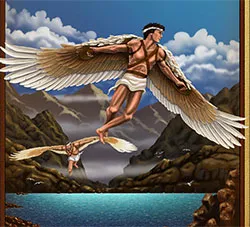
Everyone forgets that Icarus also flew.
It’s the same when love comes to an end,
or the marriage fails and people say
Everyone forgets that Icarus also flew.
they knew it was a mistake, that everybody
said it would never work. That she was
old enough to know better. But anything
worth doing is worth doing badly.
Like being there by that summer ocean
on the other side of the island while
love was fading out of her, the stars
burning so extravagantly those nights that
anyone could tell you they would never last.
Every morning she was asleep in my bed
like a visitation, the gentleness in her
like antelope standing in the dawn mist.
Each afternoon I watched her coming back
through the hot stony field after swimming,
the sea light behind her and the huge sky
on the other side of that. Listened to her
while we ate lunch. How can they say
the marriage failed? Like the people who
came back from Provence (when it was Provence)
and said it was pretty but the food was greasy.
I believe Icarus was not failing as he fell,
but just coming to the end of his triumph.
– Jack Gilbert
Poetry
06. December 15, 2024
I have come to the conclusion that I have entered a new phase in my life, and that I am trying to adjust my behavior and expectations so that they are realistic and age-appropriate. I characterize this phase as preparing to die, and this involves an immense amount of acceptance as well as personal growth. While my consciousness and intellect seems to still operate at what I would call an adult level, my body is very clearly diminished in its capacities. God forbid I would have a fatal disease and a terminal diagnosis and this would all be more urgent and real. But the fact is that I am 84 years old and significantly weaker, limited, and slowed, and sooner or later I will stop breathing, lose consciousness, and no longer exist as a self-aware person occupying space on planet Earth. I have even come to imagine that there is some aspect of my being that is present in me, that preceded and existed before there was a me as such, and that actually may continue as an energetic entity without there being this Bruce as either consciousness or as an embodiment. Soul or spirit is what this entity is popularly referred to as, but those words really don’t have specific enough meaning for me to use them casually. But it is something beyond individual molecules, although if molecules turn out to be “alive” and energetic, which they must be, then I really have no idea what I’m talking about.
In any event, in the same way as if I had a terminal illness, I have a terminal is-ness and I know it, can feel it, appreciate it, accept it…and almost welcome it. I have separation anxiety, but not really non-existence anxiety. The universe is simply too immense in all dimensions, but especially time, for me to expect that my personal self-consciousness has any likelihood of persistence beyond my extinguishment. The drop of mist or spray that momentarily appears as an independent entity on the crest of an ocean wave and then falls back as H2O united with the great oceans is still the clearest analogy I can find to the notion of what my individual existence is. It’s actually a nice feeling when I perceive it in that manner.
And so I lay abed a lot, reading, listening to music, eschewing politics, challenged by how to fill the time, irrelevant and unproductive, comfortably breathing, knowing, being, appreciating. I am almost happy.
JOURNAL ENTRIES

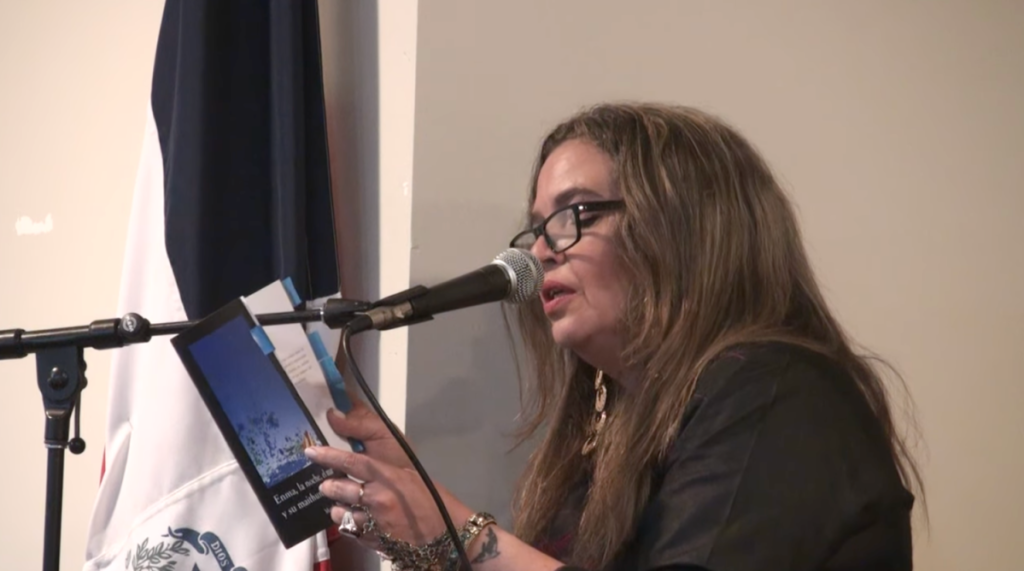
Don’t fall in love with a woman who reads – Martha Rivera-Garrido
Don’t fall in love with a woman who reads,
a woman who feels too much,
a woman who writes…
Don’t fall in love with an educated, magical, delusional, crazy woman.
Don’t fall in love with a woman who thinks,
who knows what she knows
and also knows how to fly;
a woman sure of herself.
Don’t fall in love with a woman who
laughs or cries making love,
knows how to turn her spirit into flesh;
let alone one that loves poetry (these are the most dangerous),
or spends half an hour contemplating a painting
and isn’t able to live without music.
Don’t fall in love with a woman who is interested
in politics and is rebellious and
feels a huge horror from injustice.
One who does not like to watch television at all
Or a woman who is beautiful
no matter the features of her face or her body.
Don’t fall in love with a woman who is intense,
entertaining, lucid and irreverent.
Don’t wish to fall in love with a woman like that.
Because when you fall in love
with a woman like that,
whether she stays with you or not,
whether she loves you or not,
from a woman like that, you never come back.
Martha Rivera-Garrido
Poetry
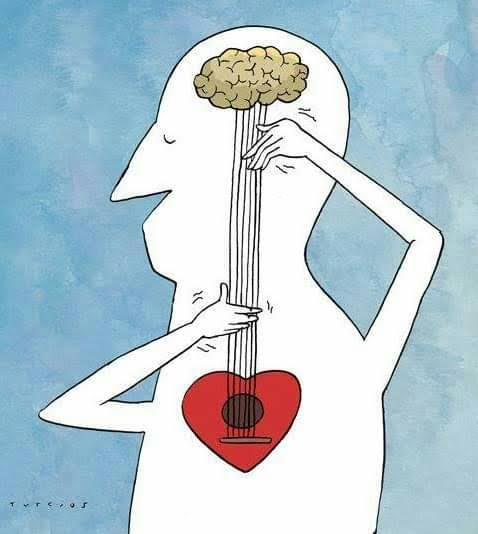
my brain and heart divorced ~ john roedel
my brain and
heart divorced
a decade ago
over who was
to blame about
how big of a mess
I have become
eventually,
they couldn’t be
in the same room
with each other
now my head and heart
share custody of me
I stay with my brain
during the week
and my heart
gets me on weekends
they never speak to one another
– instead, they give me
the same note to pass
to each other every week
and the notes they
send to one another always
say the same thing:
“This is all your fault”
on Sundays
my heart complains
about how my
head has let me down
in the past
and on Wednesday
my head lists all
of the times my
heart has screwed
things up for me
in the future
they blame each
other for the
state of my life
there’s been a lot
of yelling – and crying
so,
lately, I’ve been
spending a lot of
time with my gut
who serves as my
unofficial therapist
most nights, I sneak out of the
window in my ribcage
and slide down my spine
and collapse on my
gut’s plush leather chair
that’s always open for me
~ and I just sit sit sit sit
until the sun comes up
last evening,
my gut asked me
if I was having a hard
time being caught
between my heart
and my head
I nodded
I said I didn’t know
if I could live with
either of them anymore
“my heart is always sad about
something that happened yesterday
while my head is always worried
about something that may happen tomorrow,”
I lamented
my gut squeezed my hand
“I just can’t live with
my mistakes of the past
or my anxiety about the future,”
I sighed
my gut smiled and said:
“in that case,
you should
go stay with your
lungs for a while,”
I was confused
the look on my face gave it away
“if you are exhausted about
your heart’s obsession with
the fixed past and your mind’s focus
on the uncertain future
your lungs are the perfect place for you
there is no yesterday in your lungs
there is no tomorrow there either
there is only now
there is only inhale
there is only exhale
there is only this moment
there is only breath
and in that breath
you can rest while your
heart and head work
their relationship out.”
this morning,
while my brain
was busy reading
tea leaves
and while my
heart was staring
at old photographs
I packed a little
bag and walked
to the door of
my lungs
before I could even knock
she opened the door
with a smile and as
a gust of air embraced me
she said
“what took you so long?”
Poetry
Cape Cod
November, 2012
I love Cape Cod. It is sweet, and soft, and impermanent. I return here for two weeks – after the San Francisco visit, which I saw as such a triumph – for what seems like too few days. I come home to Joy, of course, and my most lovely cottage, about to get lovelier, and my most lovely son. To Thanksgiving, which for me is a National Day of Mourning, because, as we say, every day is a day of thanksgiving, and only some need to be marked for mourning, Columbus Day, and Memorial Day, for example.
The Indigenous People of MA are descendants of Massasoit, the Wampanoag chief betrayed by those lovely Pilgrims seeking religious freedom, his son’s head displayed on a pike in the village of Plymouth for twenty years after the white warriors returned home from Connecticut to celebrate the burning of 70 Pequot women and children in the first Thanksgiving. Yet the Wampanoag are still here, their language still spoken, their children still proud, the Earth still their mother, offering hope and good wishes to all, feeding 300 guests, calling for an end to war, offering hope and fellowship to their brothers and sisters struggling to protect their land and preserve their culture … in the Americas, in Palestine, and in all places where the guns and warships of the oppressor threaten the lives of the indigenous people.
IMG_3183.JPG
MISCELLANEOUS
