October, 2025
now browsing by month
Ode to Those Who Block Tunnels and Bridges – Sam Sax
teach us there can be movement
in stillness. in every broken syllable
of traffic a syllabus that says
while you are suffering we are all
going to be unwell—let us
instead distill business as usual
down to the speed of a tree eating
light. as usual, business is built
from freight trains and warships
even when ‘it’s just coffee.’
these bridges should only connect
the living, so when the living turn
again toward death worship
it’s time to still the delivery of plastics
and red meats to the galas of venture
capital. to reject our gods if they are
not the gods who teach us all that comes
from dirt returns to it holy—
the holiest word i know is no.
no more money for the endless
throat of money. no more
syllogisms that permission
endless suffering. no more.
and on the eighth day of a holiday
meant to represent a people
fighting occupation my teachers
who stretch a drop of oil into a week
of light take each other’s arms
across eight bridges of this settler colony
singing prayers older than any country
as the chevron burns in the distance.
o stilted vernacular of life—
o pedagogs of the godly pausing—
what mycelia spreads its speaking
limbs beneath the floors of our cities.
the only holy land i know
is where life is. in the story
i was taught alongside my first
language it takes god six days
to make the terrible world
and on seventh day he rested
and on the eighth we blocked traffic.

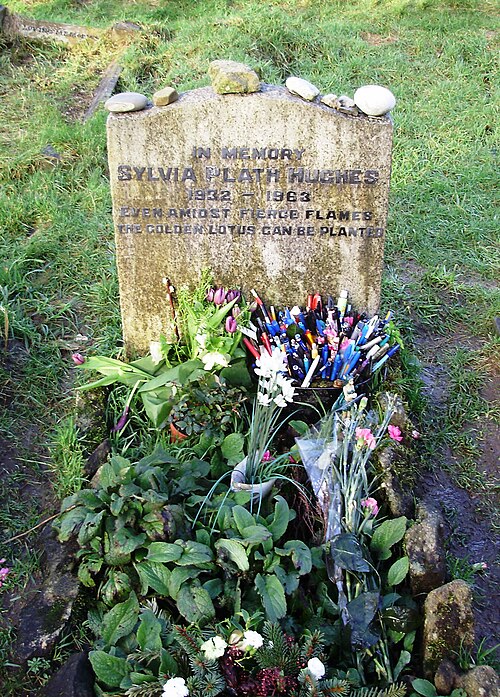
Soliloquy of the Solipsist – Sylvia Plath
I walk alone;
The midnight street
Spins itself from under my feet;
When my eyes shut
These dreaming houses all snuff out;
Through a whim of mine
Over gables the moon’s celestial onion
Hangs high.
I make houses shrink
And trees diminish
By going far; my look’s leash
Dangles the puppet-people
Who, unaware how they dwindle,
Laugh, kiss, get drunk,
Nor guess that if I choose to blink
They die.
I, when in good humor,
Give grass its green
Blazon sky blue, and endow the sun
With gold;
Yet, in my wintriest moods, I hold
Absolute power
To boycott any color and forbid any flower
To be.
I know you appear
Vivid at my side,
Denying you sprang out of my head,
Claiming you feel
Love fiery enough to prove flesh real,
Though it’s quite clear
All your beauty, all your wit, is a gift, my dear,
From me.
Meeting the Dead Poet
I meet the dead poet for our rendezvous, as planned.
He looks good, even if dead,
and wants very much to know
how things are going.
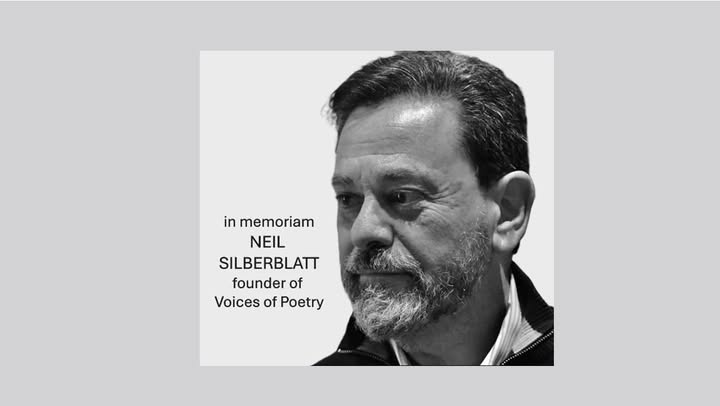
I began by describing his memorial service,
Trying to tell him who was there
Though I knew far less than half of them,
To describe the poems that were read,
alhough I didn’t understand any of them,
Except for one of his poems,
Read by the woman who led the labyrinth walk,
The woman with the seven-year-old boy
Permanently attached to her side
The boy I played chess with
While others ate and schmoozed.
I’m not very good at chess.
The boy was worse.
I made sure all games ended in a draw.
The best poem was the poet’s own poem,
Read by the woman from the spiritual center
About a time when the poet and his very Jewish father
Went to the local Catholic Church,
Something shocking all in itself,
To help the priest untangle and string the Christmas lights.
I don’t recall the specifics of the poem
But it was very dead poet-like
And involved allusions to light
And color
And Prometheus,
who stole fire from the gods
and gave it to humanity.
It was a lovely poem.
I even called it brilliant
Which, of course, the poet liked.
Afterwards, we found ourselves sitting at a table
In a Serbian café drinking kava,
Charming the young waitresses,
And drawing the attention of other patrons
Who were amazed that foreigners were among them
And wouldn’t believe the poet when he told them
He was dead
Although they promptly brought him
A tray of peeled garlic cloves
And conveyed numerous facts
About the garlic’s healing properties
And how easy they were to propagate,
Which inspired the dead poet
To put one of the cloves in his pocket
For planting when he got home.
We were next in a hotel lobby
Where a poetess was giving a reading
That was impossible to hear
Over the din of the crowd.
So the poet moved as close to her as he could
While I went off to find a new pen
With which to write the amazing poem
I knew was within me
About my encounter with a dead poet,
who I knew well.
You cannot imagine
How hard it is to find a good pen
With just the right sharpness
To create a good poem
No matter how many stores you visit.
POETRY
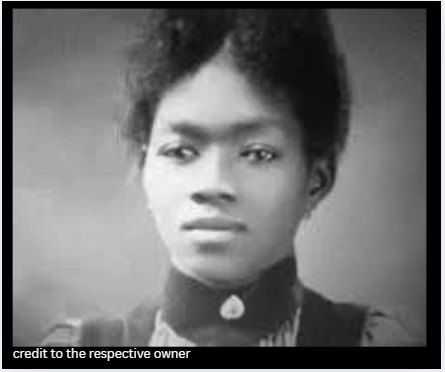
Harriet Wilson
In 1825, Harriet E. Wilson was born in Milford, New Hampshire, to a white mother and a Black father. After her mother’s death, she was given away as an indentured servant, spending her childhood in labor and hardship instead of school or play.
As an adult, abandoned by her husband and left to care for her sick child, Harriet worked as a seamstress, cleaner, and domestic servant. Poverty followed her, but she refused to be silenced.
In 1859, she accomplished something extraordinary: she published Our Nig; or, Sketches from the Life of a Free Black. It was the first novel ever published by an African American woman in the United States. With unflinching honesty, Harriet exposed that racism and exploitation existed not only in the South but also in the so-called “free” North.
The book sold poorly, and Harriet’s hope that it might provide for her son was never fulfilled. After his death, she moved to Boston, where she became a spiritualist and reformer, offering help to others even as her own name faded into obscurity.
When Harriet Wilson died in 1900, she was buried without recognition. But in 1982, scholar Henry Louis Gates Jr. rediscovered her book, restoring her place as a pioneer of American literature.
Her voice, once forgotten, now rings out again. Harriet Wilson’s story is one of resilience, courage, and proof that even if the world forgets, words can rise again to be remembered.”
RACIAL AWARENESS